
A med spa is a clinic that performs cosmetic medical treatments, such as wrinkle-relaxing injections, dermal fillers, chemical peels and microneedling, under the oversight of licensed medical providers. A day spa offers massage, facials and body treatments for relaxation, with no medical care. A dermatologist is a physician who diagnoses and treats skin, hair and nail disease. For a mole, rash or skin check, see a dermatologist.
What's the difference between a spa and a med spa?
The difference is medicine. A day spa offers relaxation services such as massage, facials and body wraps, delivered by estheticians and massage therapists. A med spa performs treatments that use prescription drugs or medical devices, like neurotoxin injections and dermal fillers, so licensed medical providers have to order, supervise or perform the work, under rules that vary by state.
The International Spa Association gives a working definition in its 2019 U.S. Spa Industry Study. A business counts as a spa if it offers at least two of three services: full-body massage, skin care treatments such as facials, or body treatments such as wraps and scrubs. A day spa offers those services on a day-use basis. A medical spa, in the same study, operates under the full-time on-site supervision of a licensed health care professional and provides medical and wellness care in a spa-like setting.
That definition describes an industry category, not a legal standard, and real med spas vary in how closely a physician supervises the work. The practical test for you is simple: if a treatment involves a needle, a prescription product, or a device that can burn or scar skin, you are getting medical care. Expect a health history, a consent form and a named provider who is licensed to do it.
| Item | Day spa | Med spa | Dermatology practice |
|---|---|---|---|
| Main purpose | Relaxation and routine skin care | Elective cosmetic medical treatments | Diagnosing and treating skin, hair and nail disease |
| Typical services | Massage, facials, body wraps and scrubs | Neurotoxins, fillers, peels, microneedling, lasers | Skin cancer checks, biopsies, rashes, acne, eczema, prescriptions |
| Who treats you | Estheticians and massage therapists | Physicians, nurse practitioners, physician assistants or nurses, depending on state rules | Dermatologists and their clinical teams |
| Health history and consent | Brief intake form | Expected before any treatment | Part of every medical visit |
| Insurance | Not covered | Cosmetic care is typically not covered | Medical problems are often covered |
What happens at a med spa?
At a med spa, you get cosmetic treatments that change how skin looks or how facial muscles move: neurotoxin injections for expression lines, hyaluronic acid fillers for lost volume, and skin treatments such as chemical peels, microneedling and laser resurfacing. A first visit usually starts with a health history and a consultation, then a treatment plan, a consent form and the procedure itself.
Injectables are the bulk of nonsurgical cosmetic work. The American Society of Plastic Surgeons' 2025 Plastic Surgery Statistics Report, which draws on data from U.S. plastic surgeons rather than med spas, found that neuromodulators (the wrinkle-relaxing injections often called Botox) made up roughly half of all minimally invasive procedures in 2025, and hyaluronic acid fillers another 30 percent. Laser skin treatments, hair removal, light-based therapies, tattoo removal and other fillers made up the rest. Med spa menus are built around the same kinds of treatments.
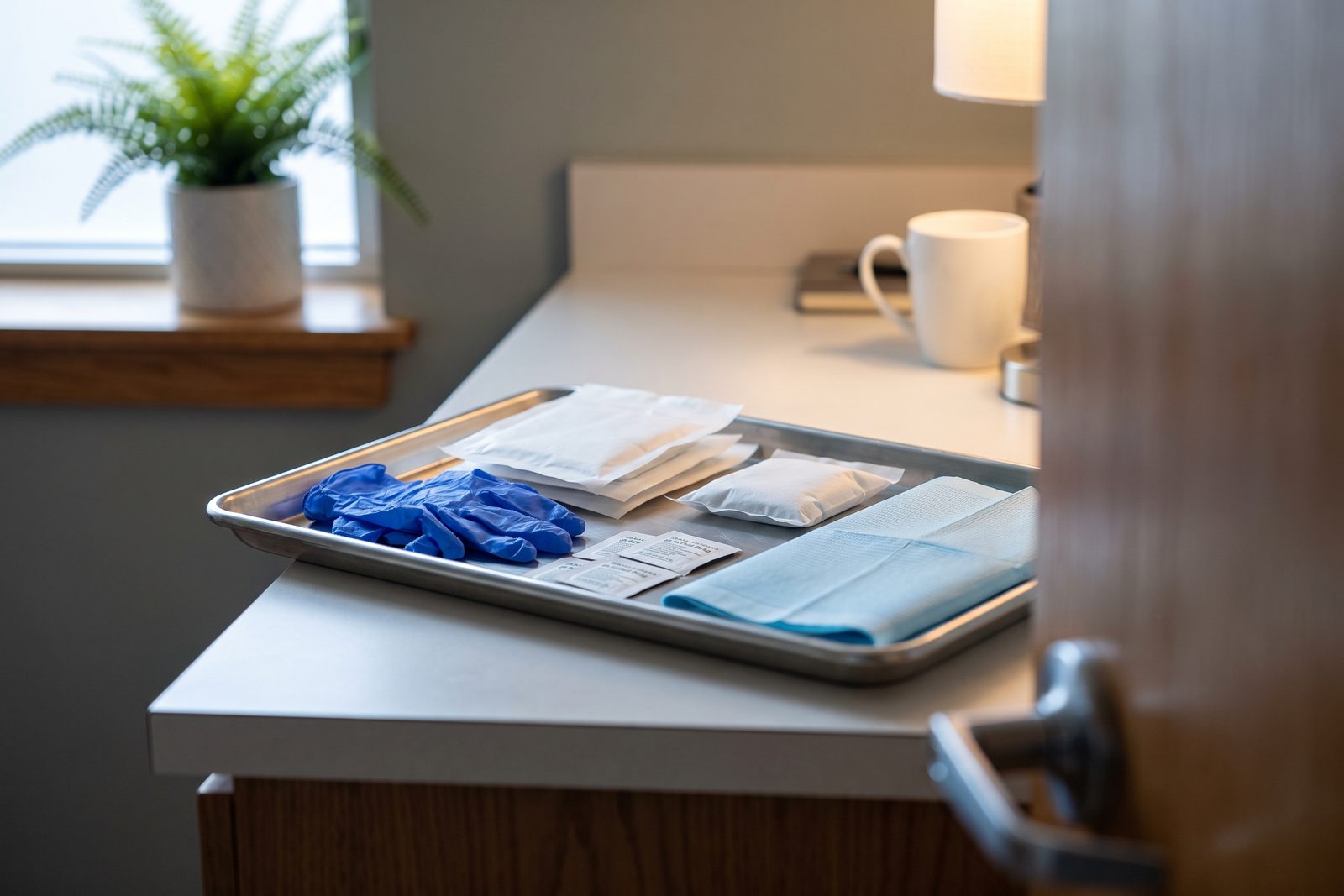
The FDA's advice on dermal fillers puts it plainly: having filler injected should be considered a medical procedure, not a cosmetic treatment. The same logic applies to neurotoxins, which are prescription drugs. So expect gloves, sterile supplies and questions about your medications. Derm Clinic MD is a physician-led med spa, and its treatments menu covers neurotoxins, fillers, biostimulators, skin treatments and hair restoration. Every treatment there starts with an in-person consultation.
How is a med spa different from a dermatologist?
A dermatologist is a medical doctor who has completed residency training in skin, hair and nail disease and can diagnose and treat medical conditions as well as cosmetic concerns. A med spa focuses on elective cosmetic treatments, and its medical director may come from any specialty. A med spa is not a substitute for a dermatologist when something on your skin needs a diagnosis.
The American Academy of Dermatology describes the training: four years of medical school, a year-long internship, then three years of dermatology residency that include 12,000 to 16,000 hours of treating patients. The AAD says that training prepares dermatologists to diagnose and treat more than 3,000 diseases of the skin, hair and nails, along with cosmetic concerns. Some dermatologists also offer cosmetic treatments, so the two worlds overlap.
Med spa leadership is more varied. In the American Med Spa Association's 2024 industry report summary, 74% of med spa medical directors came from outside the four core aesthetic specialties (plastic surgery, facial plastic surgery, oculoplastic surgery and dermatology), and 67% of single-owner med spas were owned by someone other than an MD or surgeon, such as a nurse practitioner, nurse, physician assistant or entrepreneur. Neither number makes a practice good or bad. It means you should ask who is in charge instead of assuming.
Derm Clinic MD is a physician-led med spa owned by Dr. Arshia Payman, MD. It is a cosmetic practice, not a medical dermatology practice, so skin cancer checks and care for rashes, moles or eczema belong with a dermatologist. You can read more about the practice and about Dr. Payman's background before you visit.
A consultation is the place to ask. Dr. Payman sees patients in Buckhead and Cumming.
When should you see a dermatologist instead of a med spa?
See a dermatologist, not a med spa, for anything that might be a disease: a mole or spot that is new or changing, a sore that will not heal, a rash, eczema, psoriasis, acne that needs prescription treatment, or hair loss you cannot explain. Cosmetic treatment can wait a few weeks. A diagnosis should come first.
The AAD makes a point that matters here: what looks like an age spot could be a skin cancer, and removing a skin cancer the way you would remove an age spot can allow the cancer to grow and possibly spread. That is a good reason to have a new or changing spot examined by a dermatologist before anyone treats it cosmetically, even with a peel or a laser.
If you spend Atlanta summers outdoors, at the lake, on a golf course or walking the neighborhood, you likely carry years of sun exposure on your face, chest and hands. Some of the spots that leaves behind are harmless and some are not, and a mirror cannot tell you which. When you are unsure which kind of practice you need, start with a dermatologist, then come back to a med spa for cosmetic care once you have a clear answer.
- A new mole or spot, or one that changes in size, shape or color
- A spot that itches, bleeds or will not heal
- Rashes, hives, eczema or psoriasis
- Acne that is scarring or not responding to over-the-counter care
- Sudden or patchy hair loss
- Routine skin checks, especially if you have had skin cancer or have a family history of it

Who runs a med spa, and who does the treatments?
It varies widely. Some med spas are owned and run by physicians who treat patients on site. Others are owned by nurses, physician assistants or business owners and work with a physician medical director who may rarely be present. Treatments may be performed by physicians, nurse practitioners, physician assistants or registered nurses, depending on state law and the practice.
Two recent studies show how wide the range is. In a 2023 secret-shopper telephone study of 127 med spas in the Chicago area, published in Dermatologic Surgery, a supervising physician was not on site at 81.1% of them, and patients were told so at 64.6%. A 2025 cross-sectional study of Missouri med spas in the same journal found that 94.59% were affiliated with a physician, but only 22.52% had a physician on site while cosmetic treatments were given.
Rules differ from state to state. The authors of the Chicago study note that the degree of supervision and level of expertise required for cosmetic procedures differs significantly between states. Georgia sets its own requirements, and they can change, so ask each practice directly rather than assuming. The questions at the end of this post are a good place to start.
Are med spas safe?
No setting makes a cosmetic treatment free of risk. Neurotoxins, fillers, peels and lasers are medical treatments with known side effects. The CDC and FDA point to what raises the risk of serious harm: counterfeit or unapproved products, injectors who are not licensed and trained, and no plan for complications. Each of those is something you can check before you book.
A 2024 CDC report shows what can happen when those safeguards are missing. Seven women became ill after receiving presumed counterfeit botulinum toxin in nonmedical settings, mostly private homes, with symptoms such as drooping eyelids, trouble swallowing and shortness of breath; four were hospitalized and two were monitored in intensive care. The same report notes that even in clinical settings, the toxin can spread near the injection site and cause temporary effects such as a drooping eyelid or double vision. Its conclusion: these injections should be given by licensed and trained providers using FDA-approved products, preferably in a licensed or accredited health care setting.
The FDA issued a related alert in April 2024 after counterfeit Botox turned up in multiple states. It tells consumers to confirm that their product comes from an authorized source and to ask whether the person injecting is licensed and trained to give it. For fillers, the FDA lists bruising and swelling as common and names unintended injection into a blood vessel as the most concerning risk. The chance is low, but the FDA says it can cause tissue death, vision loss including blindness, or stroke, and the damage may be permanent. Ask what the provider's plan is if that happens.
Your skin tone matters too. The AAD warns that people with skin of color can develop permanent pigment problems from a chemical peel when the person performing it lacks expertise with darker skin tones. If you have brown or Black skin, ask how often the provider treats skin like yours with the specific peel or laser you are considering.
How do you choose a med spa?
Choose a med spa the way you would choose any medical practice: by who treats you and how, not by the decor or the discount. Before booking, ask who owns the practice, who will perform your treatment and what license they hold, whether a physician is on site, which products they use, and what happens if you have a complication.
A well-run practice answers these without hesitation. The AAD also suggests asking how much experience the provider has with the exact procedure, how often they treat people with your skin tone and age, and what results you can realistically expect. Our guide to your first med spa consultation walks through what that visit should cover, from health history to consent.
Derm Clinic MD has two offices, one in Buckhead and one in Cumming, and every treatment at either office starts with an in-person consultation. If you have a specific concern you want to talk through, you can book a consultation at whichever office is closer to home or work, and bring the questions below.
- Who owns the practice, and how involved is the medical director day to day?
- Who will treat me, and what license and training do they have for this treatment?
- Is the product FDA-approved for this use, and where is it purchased?
- What are the risks for the specific areas I want treated?
- What is the plan if a complication happens during or soon after treatment?
- Will I have a consultation before anyone treats me?
Questions people ask
Can a med spa check my moles?
Not for a diagnosis. Checking a mole for skin cancer means a medical exam and sometimes a biopsy, which is the work of a dermatologist. Derm Clinic MD is a cosmetic practice and does not offer medical dermatology such as skin cancer checks or care for moles, rashes or eczema. If a spot is new, changing, itching or bleeding, see a dermatologist first; cosmetic treatment of that area can come later, once you know what it is.
Can you get Botox at a day spa?
Botox is a prescription drug, so it belongs in a medical setting with a licensed provider. The CDC's 2024 investigation linked serious illnesses to injections given by unlicensed people in nonmedical settings, mostly homes, and it recommended licensed, trained providers using FDA-approved products in a licensed or accredited health care setting. If any business offers injections, ask who the provider is and what license they hold.
Does health insurance cover med spa treatments?
Usually not. Cosmetic treatments are elective, and the American Academy of Dermatology notes that cosmetic procedures are typically not covered, though it suggests confirming with your plan. A few treatments also have medical uses, and coverage for those depends on your diagnosis and your plan. Ask the practice for a written estimate before treatment so you know your out-of-pocket cost.
Do I need a consultation before my first med spa treatment?
You should expect one. A consultation is where a provider reviews your health history and medications, examines the area, explains your options, risks and costs, and gets your consent. At Derm Clinic MD, every treatment starts with an in-person consultation. A practice willing to treat you without asking about your health and medications is skipping a step that exists to protect you.
How old do you have to be to get fillers or Botox?
FDA approvals set the floor. The FDA has approved dermal fillers for adults 22 and older for specific uses, and the Botox Cosmetic label says it is not recommended for anyone younger than 18. Beyond age, what matters is whether a treatment fits your concern and your health history, which is a question for the consultation rather than the calendar.
Is Derm Clinic MD a dermatology practice?
No. Derm Clinic MD is a physician-led med spa owned by Dr. Arshia Payman, MD, with offices in Buckhead and Cumming. It offers cosmetic treatments such as neurotoxins, fillers, biostimulators, skin treatments and hair restoration. It does not offer medical dermatology, such as skin cancer checks or treatment for rashes, moles or eczema. For those, see a dermatologist.
Sources
- 2019 U.S. Spa Industry Study. International Spa Association (ISPA), 2019. https://experienceispa.com/wp-content/uploads/2019/09/2019_US_Spa_Industry_Study_Final_Master_File_PDF3.pdf
- 2025 Plastic Surgery Statistics Report. American Society of Plastic Surgeons, 2026. https://www.plasticsurgery.org/documents/news/statistics/2025/plastic-surgery-statistics-report-2025.pdf
- Dermal Fillers (Soft Tissue Fillers). U.S. Food and Drug Administration, content current as of July 6, 2023. https://www.fda.gov/medical-devices/aesthetic-cosmetic-devices/dermal-fillers-soft-tissue-fillers
- What is a dermatologist?. American Academy of Dermatology, updated 2022. https://www.aad.org/public/fad/what-is-a-derm
- 2024 Medical Spa State of the Industry Executive Report Recap. American Med Spa Association, November 2024. https://www.americanmedspa.org/news/2024-medical-spa-state-of-the-industry-executive-report-recap/
- Who Is Holding the Syringe? A Survey of Truth in Advertising Among Medical Spas. Hogan S, Wood E, Mishra V. Dermatologic Surgery, 2023. https://pubmed.ncbi.nlm.nih.gov/37774041/
- Pulling Back the Curtain: A Cross-Sectional Analysis of Medical Spas in Missouri. Ferrante AM et al. Dermatologic Surgery, 2025. https://pubmed.ncbi.nlm.nih.gov/39105502/
- Notes from the Field: Illnesses After Administration of Presumed Counterfeit Botulinum Toxin in Nonmedical Settings, Tennessee and New York City, March 2024. CDC, Morbidity and Mortality Weekly Report, July 2024. https://www.cdc.gov/mmwr/volumes/73/wr/mm7327a3.htm
- Counterfeit Version of Botox Found in Multiple States. U.S. Food and Drug Administration, April 2024 (updated May 2024). https://www.fda.gov/drugs/drug-safety-and-availability/counterfeit-version-botox-found-multiple-states
- Questions to ask when considering a cosmetic treatment (AAD Your safety page). American Academy of Dermatology, updated August 2025. https://www.aad.org/public/cosmetic/safety/ask-questions
- BOTOX Cosmetic (onabotulinumtoxinA) prescribing information and Medication Guide. Allergan / U.S. National Library of Medicine DailyMed, label revised October 2024. https://dailymed.nlm.nih.gov/dailymed/drugInfo.cfm?setid=485d9b71-6881-42c5-a620-a4360c7192ab
- Chemical peels: FAQs. American Academy of Dermatology, undated page, accessed October 2026. https://www.aad.org/public/cosmetic/younger-looking/chemical-peels-faqs
This article is general education and is not medical advice. It does not replace an in-person consultation. Whether a treatment suits you, and what result is realistic, depends on your health history and an examination.
Derm Clinic MD · Last updated October 2026.