
Sculptra is an injectable poly-L-lactic acid that works gradually over weeks rather than filling a line on the spot. Its main downsides are the wait, the need for a series of sessions, a risk of small lumps called papules and nodules that can appear months later, and the fact that it cannot be dissolved the way hyaluronic acid filler can.
What is Sculptra?
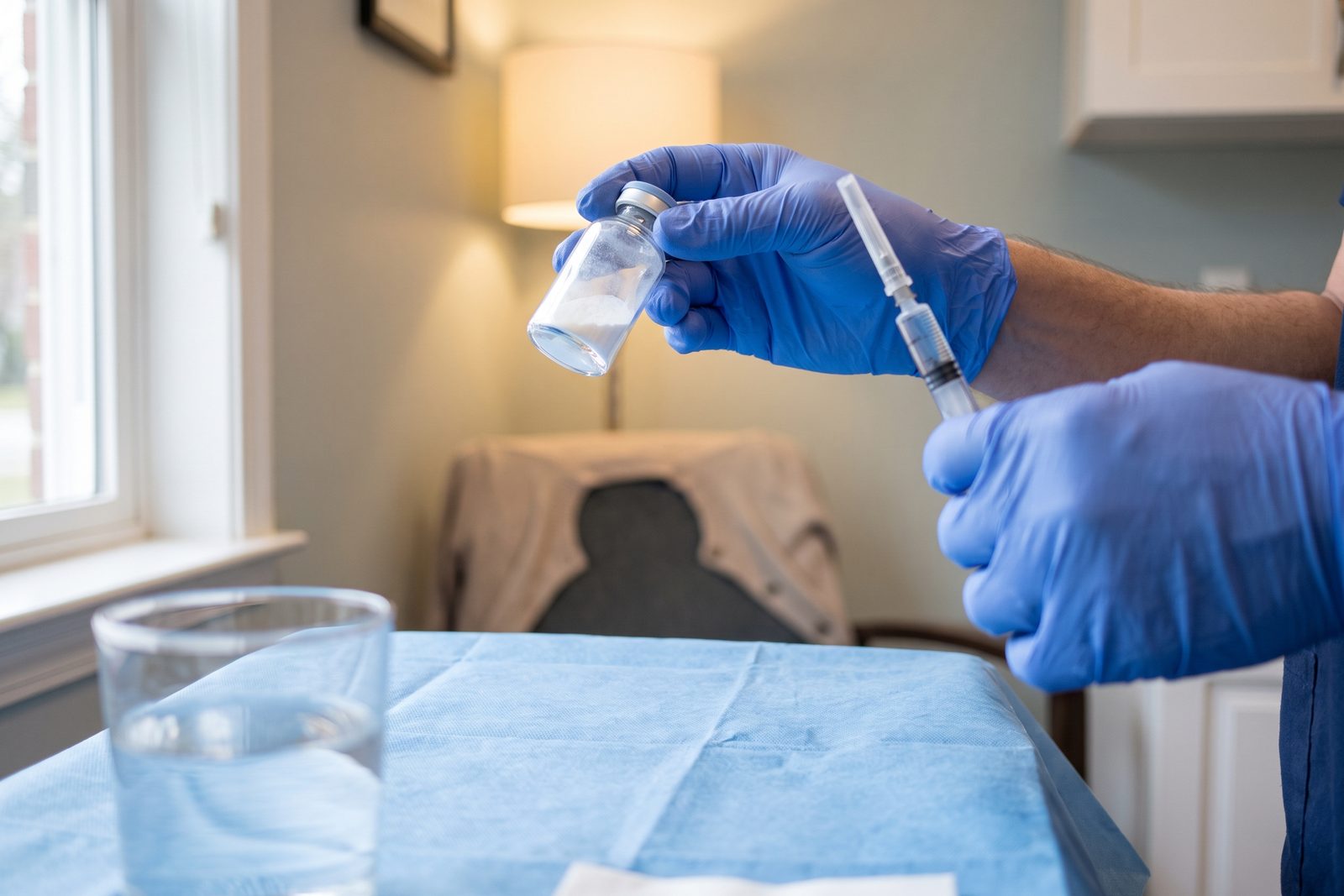
Sculptra is a biostimulator made of poly-L-lactic acid (PLLA), a biodegradable, man-made polymer that is also used in absorbable stitches. It comes as a freeze-dried powder mixed with sterile water before injection. Instead of filling a line on the spot, its effects build over several weeks, and a 2026 systematic review describes it as a collagen biostimulator.
The FDA first approved Sculptra in 2004 to restore facial fat loss in people with HIV. In 2009 it was approved for immune-competent adults to correct shallow to deep nasolabial folds and other facial wrinkles, and in 2023 the approval expanded to fine lines and wrinkles in the cheek region. Uses outside those indications are off-label, and the FDA recommends against using fillers to enlarge the buttocks.
Because the change develops in your own tissue, the label tells injectors not to overcorrect: the treated depression is expected to keep improving for several weeks following injection. That is a different mindset from hyaluronic acid filler, where most of the change is visible right away, and it is why a Sculptra plan builds in waiting time. Our Sculptra page explains how this treatment is offered at Derm Clinic MD.
What is the downside of Sculptra?
The main downsides are time, commitment and lumps. Change builds over weeks, most plans need more than one session, small bumps can appear months later, and the product cannot be dissolved with an enzyme the way hyaluronic acid filler can. The patient guide also describes a home massage routine for several days after each session, which your injector will confirm, so plan for real follow-through.
Cost is a downside too, although it is spread out. Because a plan is a series, a full course costs more than a single visit, and because the benefit appears slowly, you pay for each session before you see much change. Ask for a quote that covers the full series rather than one session. This article does not list Derm Clinic MD prices; your plan and quote come from your consultation.
None of this makes Sculptra a poor choice. It makes it a specific one: it suits people who want gradual, longer-lasting change and are willing to plan for it. If you want to see a difference by next weekend, hyaluronic acid dermal fillers are usually the closer match, and many plans use both at different times, depending on the area being treated.
- Slow: improvement develops over several weeks, so it does not suit a last-minute event.
- A series: clinical trials allowed up to four sessions, spaced three to four weeks apart.
- Lumps: papules and nodules under the skin, sometimes appearing months later.
- No undo: the FDA says fillers not made of materials such as hyaluronic acid can be difficult or impossible to remove.
- Homework: a massage routine if your injector asks for one, which the patient guide describes as five days following each session.
- Limits: not for the lips, not studied around the eyes, and not for people prone to keloids.
How many Sculptra sessions will you need?
Plan on a series. In the trial behind the 2009 approval, people received up to four sessions three weeks apart, and in the 2023 cheek trial, up to four sessions about four weeks apart until the injector and patient agreed on the correction. The label says your provider will assess the need for another session no sooner than four weeks.
That spacing exists because the change keeps developing. The label notes that the original depression may reappear at first and then gradually improve over several weeks, and it warns injectors against overcorrecting. Judging too early risks overcorrecting, which the label also links to nodules. So the first session is a starting point, and later sessions are adjustments based on how your tissue responded. Your injector will set the interval for you.
Expect visible aftereffects for a while. In the 2023 cheek trial, the most common reactions reported by treated participants were tenderness and bruising (93.5% each), swelling (87.1%) and pain, including burning (83.9%). Almost all were mild or moderate, and 76.1% resolved within 14 days. Leave room on your calendar between sessions, especially before photos or a big event, and follow your written aftercare instructions.
A consultation is the place to ask. Dr. Payman sees patients in Buckhead and Cumming.
What are the cons of Sculptra, and why does the massage matter?
Lumps are the con to understand. Sculptra can cause small papules and larger nodules under the skin, usually felt rather than seen, that can show up days to months later and take months to fade. The label says massaging the treated area helps the product distribute evenly and may minimize nodules, which is why the at-home routine matters.
The numbers depend on the study and the area. In the trial behind the 2009 approval, 17.2% of Sculptra patients had nodules or papules, against 12.8% with the collagen control, and the median onset for nodules was 160 days; most resolved on their own. A later five-year post-approval study of 867 people, which counted any lump or bump, found nodules or papules in 28.5% overall: 27.2% in marionette lines, 19.0% in nasolabial folds, 5.4% in cheek folds and 3.6% in chin creases.
The current US instructions for use recommend massaging the treated area in a circular motion for five minutes, five times a day, for five days following each session, according to your provider's advice. Follow your written aftercare instructions, since your injector may adjust them. The label also links superficial injection and overcorrection to early nodules, which is one reason technique and patience matter as much as the product.
Does Sculptra last longer than fillers?
Often, yes, by the FDA's general estimates. The FDA says poly-L-lactic acid effects may last up to 2 years, compared with approximately 6 to 12 months for hyaluronic acid fillers and about 18 months for calcium hydroxylapatite. In the 2023 cheek trial, 76.9% of treated participants who joined the extension study still met the response definition at 24 months with no further treatment.
Longer is not automatically better for everyone. A longer-lasting product is harder to adjust if your goals change, and the shorter life of hyaluronic acid is part of what makes it easy to fine-tune. A 2024 systematic review of 11 randomized trials found PLLA effects sustained for at least 25 months in four of them, but it rated the overall evidence as low quality, with five trials at high risk of bias. In the label's five-year safety study, 66.3% of participants seen at year 5 still rated themselves at least slightly improved.
On duration, Radiesse sits between the two. It is calcium hydroxylapatite in a gel, FDA-approved since 2006 for moderate to severe facial wrinkles and folds such as nasolabial folds, since 2015 for volume loss in the back of the hands, and in 2026, in diluted form, for wrinkles of the upper chest. The FDA notes it is visible on x-rays. Our Radiesse page covers it in more detail.
| Question | Sculptra (poly-L-lactic acid) | Hyaluronic acid filler | Radiesse (calcium hydroxylapatite) |
|---|---|---|---|
| What it is | A biodegradable man-made polymer | A sugar found in skin, in gel form | Mineral particles in a gel |
| How long the effect lasts (FDA) | Up to 2 years | Approximately 6 to 12 months | Approximately 18 months |
| Can an enzyme dissolve it? | No | Yes, hyaluronidase (off-label use) | No |
Is Sculptra safer than fillers?
Not safer, just different. Sculptra and hyaluronic acid fillers share the most serious injectable risk, accidental injection into a blood vessel, and the Sculptra label warns of rare vision impairment, blindness, stroke and skin necrosis. The differences are that Sculptra carries a distinct risk of delayed nodules and has no dissolving enzyme, while hyaluronic acid can be broken down.
The enzyme point matters most when something goes wrong. Hyaluronidase can reverse many hyaluronic acid filler complications, a use that a 2024 review describes as off-label in aesthetics. Sculptra has no equivalent reversal step, so a nodule that does not settle may need medical treatment, and the label notes that some delayed nodules have needed surgical removal. Our dissolving filler page explains how the enzyme is used for hyaluronic acid.
Serious events are uncommon with both. In the 2023 cheek trial, beyond the expected short-term symptoms, 20.6% of treated participants had an adverse event considered related to treatment, most often bruising, and all of those were mild or moderate. Risk also depends on matching the product to your goal and on an injector who knows the facial anatomy, a point the Sculptra label itself makes about training and experience.
Who is Sculptra a good fit for, and who should skip it?
Sculptra suits adults who want a gradual, longer-lasting improvement in facial wrinkles, folds or cheek wrinkles and will commit to a series and any home routine the injector asks for. It is not for anyone with a history of keloids or hypertrophic scarring, severe allergies with a history of anaphylaxis, or a lidocaine allergy when lidocaine is added, and it is not used in the lips.
Some situations call for waiting or a different plan. The label says safety has not been evaluated during pregnancy or breastfeeding, in people under 18, or in people with conditions such as connective tissue disease or bleeding disorders, or on immunosuppressive therapy. Treatment is deferred where there is active acne, a rash or an infection at the site, and a history of cold sores can flare. Skin tone matters too: in the label's five-year study, pigment changes at the injection site were uncommon but more frequent in darker skin types (1.6% versus 0.2%), and the label notes that darker skin is more prone to post-inflammatory hyperpigmentation.
Plan around the sun as well. The label advises keeping the treated area out of the sun and away from UV lamps and extreme temperatures until any early swelling and redness has resolved, so a Lake Lanier weekend or an afternoon at an outdoor game is better scheduled a little later. To see whether Sculptra, filler or Radiesse fits your face, book a consultation in Buckhead or Cumming.

Questions people ask
Does Sculptra hurt?
Most people feel some tenderness or pain during and after treatment. Lidocaine can be added to the mixed product for comfort, except in people allergic to it, and the label suggests a cloth-wrapped ice pack in the first 24 hours to reduce swelling and bruising. It says redness, swelling or bruising typically settles within hours to a week, and a hematoma, a collection of blood under the skin, within about two weeks.
When will I see Sculptra results?
Gradually. The FDA says PLLA effects become increasingly apparent over several weeks, so the first days after a session are not a guide. Because the plan is judged across the full series, expect to wait a few months before deciding how much change you have, and keep your follow-up visits so your injector can judge it with you.
Can Sculptra be dissolved?
Not the way hyaluronic acid filler can. Hyaluronidase breaks down hyaluronic acid, and the FDA notes that fillers not made of materials such as hyaluronic acid can be difficult or impossible to remove. If nodules form, the label lists options from published reports such as steroid injections, subcision and, in some cases, surgical removal.
Can I get Sculptra and filler at the same visit?
Ask your injector. The label says Sculptra's safety and effectiveness have not been systematically evaluated with other filler products used before or during the same session, and other fillers should not be mixed directly with it. Your injector may prefer to stage treatments so each one can be judged on its own.
Can Sculptra be used in the lips?
No. The label says its safety and effectiveness in the lips have not been evaluated and that it should not be injected into the red part of the lips. Injection around the eyes has not been studied either, and the label notes published reports of a higher risk of papules and nodules there. For lips, ask about hyaluronic acid filler instead.
What happens if I skip the massage?
You lose one of the steps the label says may help. It says massaging the treated area helps the product spread evenly and may minimize nodules. Skipping it does not mean a lump will form, and doing it does not rule one out. Follow your written aftercare instructions, tell your injector if you could not keep up the routine, and call if you notice a firm or visible bump.
Is Sculptra the same as Radiesse?
No. Both are non-hyaluronic acid injectables described as collagen biostimulators, but Sculptra is poly-L-lactic acid, a powder mixed with water before injection, and Radiesse is calcium hydroxylapatite, mineral particles in a gel. Because neither is hyaluronic acid, both can be difficult to remove. They are approved for different indications, so your injector chooses based on the area and your goal.
Sources
- Sculptra Instructions for Use (US), revised July 2023. Galderma, FDA-approved labeling, 2023. https://www.sculptrausa.com/docs/Sculptra-e-IFU
- Summary of Safety and Effectiveness Data: Sculptra for fine lines and wrinkles in the cheek region, P030050/S039. U.S. Food and Drug Administration, 2023. https://www.accessdata.fda.gov/cdrh_docs/pdf3/P030050S039B.pdf
- Summary of Safety and Effectiveness Data: Sculptra Aesthetic, P030050/S002. U.S. Food and Drug Administration, 2009. https://www.accessdata.fda.gov/cdrh_docs/pdf3/P030050S002b.pdf
- FDA-Approved Dermal Fillers. U.S. Food and Drug Administration, 2020. https://www.fda.gov/medical-devices/aesthetic-cosmetic-devices/fda-approved-dermal-fillers
- Dermal Fillers (Soft Tissue Fillers). U.S. Food and Drug Administration, 2023. https://www.fda.gov/medical-devices/aesthetic-cosmetic-devices/dermal-fillers-soft-tissue-fillers
- Summary of Safety and Effectiveness Data: RADIESSE Injectable Implant, P050052/S162. U.S. Food and Drug Administration, 2026. https://www.accessdata.fda.gov/cdrh_docs/pdf5/P050052S162B.pdf
- Efficacy and Safety of Poly-l-Lactic Acid in Facial Aesthetics: A Systematic Review. Polymers (Basel), 2024. https://pubmed.ncbi.nlm.nih.gov/39339028/
- Efficacy, Durability, and Safety of Collagen Biostimulators Based on Poly-L-Lactic Acid (PLLA) and Calcium Hydroxyapatite (CaHA) in the Face: A Systematic Review. Aesthetic Plastic Surgery, 2026. https://pubmed.ncbi.nlm.nih.gov/41184662/
- Hyaluronidase for Dermal Filler Complications: Review of Applications and Dosage Recommendations. JMIR Dermatology, 2024. https://pmc.ncbi.nlm.nih.gov/articles/PMC10836581/
- Start the new year off with a fresh start (and skin). American Academy of Dermatology news release, 2024. https://www.aad.org/news/start-the-new-year-off-fresh-skin
This article is general education and is not medical advice. It does not replace an in-person consultation. Whether a treatment suits you, and what result is realistic, depends on your health history and an examination.
Derm Clinic MD · Last updated October 2026.