

A liquid facelift has no set price because it is a custom mix of injectables, usually hyaluronic acid filler plus a neuromodulator such as Botox, sometimes with a collagen stimulator like Sculptra. You pay for each product and area. For scale, The Aesthetic Society's 2022 national averages, now several years old, were $700 for fillers and $326 for botulinum toxin per procedure, and prices vary by region and provider.
What is a liquid facelift?
A liquid facelift is a plan that uses injectables instead of surgery to soften lines, restore lost volume and refine contours. It usually pairs hyaluronic acid filler with a neuromodulator, and some plans add a biostimulator such as Sculptra or Radiesse. It is a descriptive term, not a single FDA-approved procedure, so two plans with the same name can look very different.
Each product in the mix does a different job. Filler adds volume where tissue has thinned, such as the cheeks or the folds beside the mouth. A neuromodulator relaxes the muscles that crease the forehead, the frown area and the skin around the eyes. A biostimulator works more slowly over several weeks. The FDA reviews and approves each product on its own, for specific areas of the face.
Because no single approval covers the combination, the plan depends on the judgment of the person treating you, which is why every plan at Derm Clinic MD starts with an in-person consultation. You will also see this approach called a liquid lift or an injectable facelift. Our non-surgical facelift page explains how the treatments fit together, and the dermal fillers page covers the hyaluronic acid filler families the practice uses.
How much does a non-surgical facelift cost?
A non-surgical facelift usually costs the sum of its parts: each syringe of filler, each neuromodulator area and any biostimulator sessions. National averages give a rough sense of scale. The Aesthetic Society's 2022 databank lists an average fee of $700 for fillers and $326 for botulinum toxin, against $9,679 for a surgical facelift. These are dated national averages, and all of them vary by region and provider.
Those figures are average surgeon fees billed in 2022 by 200 participating plastic surgery practices across the U.S., and The Aesthetic Society notes that they may not include fees for anesthesia, medical tests, prescriptions or other related costs. Prices have had several years to change since then, so treat them as a guide to scale, not a quote. A liquid facelift often involves more than one filler area plus neuromodulator, so one round can cost well above the single filler or toxin average in the table below.
The bigger difference is time. A surgical facelift is one operation, although ASPS notes that it cannot stop the aging process, while injectables wear off and are repeated. When you compare options, ask for an itemized plan that lists each product, each area and how often each part would be repeated in a year, then compare yearly totals rather than first visits. This article does not list Derm Clinic MD prices; your consultation is where you get a written plan for your own face.
| Treatment | Average fee (U.S., 2022 data) | What the average covers |
|---|---|---|
| Fillers | $700 | One filler procedure; a liquid facelift may use more than one |
| Botulinum toxin | $326 | One neuromodulator treatment |
| Surgical facelift | $9,679 | Surgeon and facility fees; anesthesia and other costs may be extra |
How long does a liquid facelift last?
A liquid facelift lasts as long as each of its parts, so most people maintain it in stages. Neuromodulator effects last about 3 to 4 months, and sometimes longer, according to the American Academy of Dermatology. The FDA says hyaluronic acid filler effects last approximately 6 to 12 months, calcium hydroxylapatite about 18 months, and poly-L-lactic acid up to 2 years.
Those ranges are general. The FDA notes that the time the effect lasts depends on the filler material and the area where it is injected, and that outcomes depend on the underlying tissue structure and the volume and type of filler used. So a cheek filler and a lip filler may not last the same length of time, even when they come from the same product family.
In practice, a liquid facelift is a maintenance plan. Because neuromodulator effects fade in months, many people refresh those areas a few times a year and top up filler less often. A biostimulator such as Sculptra is given as a series of injections over several months and then maintained less often. Ask your injector to map out what a full year looks like, including which parts could wait if your budget or schedule changes.
| Part of the plan | How long the effect usually lasts |
|---|---|
| Neuromodulator (for example Botox, Dysport, Jeuveau) | About 3 to 4 months, sometimes longer |
| Hyaluronic acid filler | Approximately 6 to 12 months |
| Calcium hydroxylapatite (Radiesse) | Approximately 18 months |
| Poly-L-lactic acid (Sculptra) | Up to 2 years |
A consultation is the place to ask. Dr. Payman sees patients in Buckhead and Cumming.
What can a liquid facelift do, and what can it not do?
A liquid facelift can restore volume, soften lines and refine contours, but it cannot remove or tighten loose skin. The American Society of Plastic Surgeons states that a facelift can only be performed surgically and that minimally invasive treatments cannot achieve the same results, although they may delay the point where surgery makes sense and can complement it.
Start with what is causing the change you see. If your cheeks have flattened and the folds beside your mouth have deepened because volume has thinned, filler or a biostimulator can add back some of that volume. If your forehead and frown lines crease when you move, a neuromodulator relaxes those muscles. Those are the problems injectables are designed for.
Loose skin is a different problem. ASPS lists sagging facial skin, jowls along the cheeks and jaw, and loose skin and fat in the neck among the changes a surgical facelift is meant to treat. Adding more filler to heavy, lax skin adds volume, not lift, so there is a ceiling on what injectables can do. A careful injector will tell you when more product will not give you the change you want.

Who is a good candidate, and who should see a surgeon instead?
You are usually a good candidate if your main concerns are lost volume, early folds and expression lines, and you want a gradual, adjustable change without surgery. If loose skin along the jaw and neck is what bothers you most, a consultation with a plastic surgeon is often the more useful first step, because injectables cannot do what a facelift operation does.
The FDA approves dermal fillers for adults 22 and older and states that their safety is unknown during pregnancy, while breastfeeding and in people under 22. Beyond that, share your full health history, your medicines and any past filler or surgery in the area, because each can change the plan. Do not stop or change any medicine on your own; your injector will tell you what applies to you.
Expectations matter as much as anatomy. A liquid facelift suits people who like small steps that fade over time and do not mind returning for maintenance. If you would rather have one larger change and fewer visits over the next decade, it is worth hearing what a surgeon recommends before you spend on injectables, since ASPS describes the two as complementary rather than interchangeable.
- Often a good fit: flattened cheeks, deepening smile or marionette lines, frown and forehead lines, early softening along the jaw.
- Often a good fit: you like small steps you can adjust and are comfortable with maintenance visits.
- Worth a surgical opinion: heavy jowls, loose neck skin, or skin that folds over the jawline.
- Wait and ask first: pregnancy or breastfeeding, since the FDA says filler safety in those settings is unknown.
What is the most effective non-surgical facelift option?
There is no single most effective option, because each treatment addresses a different cause. Filler and biostimulators address lost volume, neuromodulators address lines from muscle movement, and skin treatments address texture and tone. The plan that works is the one matched to what your examination shows, which is why two people asking for the same thing often leave with different plans.
Neuromodulators and hyaluronic acid fillers are the most familiar choices nationally. In its 2025 statistics, the American Society of Plastic Surgeons reported that neuromodulator injections made up roughly half of all minimally invasive procedures and hyaluronic acid fillers another 30 percent. That tells you they are widely used and familiar to injectors. It does not tell you which one your face needs, or whether you need either.
Biostimulators work on a slower timeline. A 2026 systematic review describes poly-L-lactic acid and calcium hydroxyapatite as collagen biostimulators and reports effects lasting up to 25 months and 12 to 18 months respectively, which suits people who prefer gradual change. If texture bothers you more than volume, skin treatments may matter more than any injectable. Our Sculptra guide compares biostimulators with filler in more detail.
What are the risks of a liquid facelift?
The common risks are the ones you would expect from injections: bruising, redness, swelling, pain, tenderness and itching. The FDA says most side effects like swelling and bruising appear soon after injection and many resolve within days to weeks. The serious risk is filler entering a blood vessel, which is uncommon but can cause tissue death, vision problems including blindness, or stroke, and the damage can be permanent.
The FDA tells patients to seek immediate medical attention for unusual pain, vision changes, a white, gray or blue look to the skin near the injection site, or any sign of a stroke during or shortly following treatment. Knowing those signs is part of being an informed patient. It is also fair to ask any injector how they would recognize and manage a complication before you book.
The neuromodulator part has its own side effects. The American Academy of Dermatology lists swelling, redness, soreness and bruising, an uncommon mild headache, and, rarely, weakness in a neighboring muscle that leaves a temporarily droopy brow or eyelid. Signs of botulism, such as trouble breathing, swallowing or speaking, are very rare and need medical care right away.
Hyaluronic acid filler has one practical advantage: an enzyme called hyaluronidase can break it down, a use that a 2024 review describes as off-label in aesthetics. The FDA cautions that fillers not made of materials such as hyaluronic acid can be difficult or impossible to remove. Our dissolving filler page explains when the enzyme is used and what to expect.
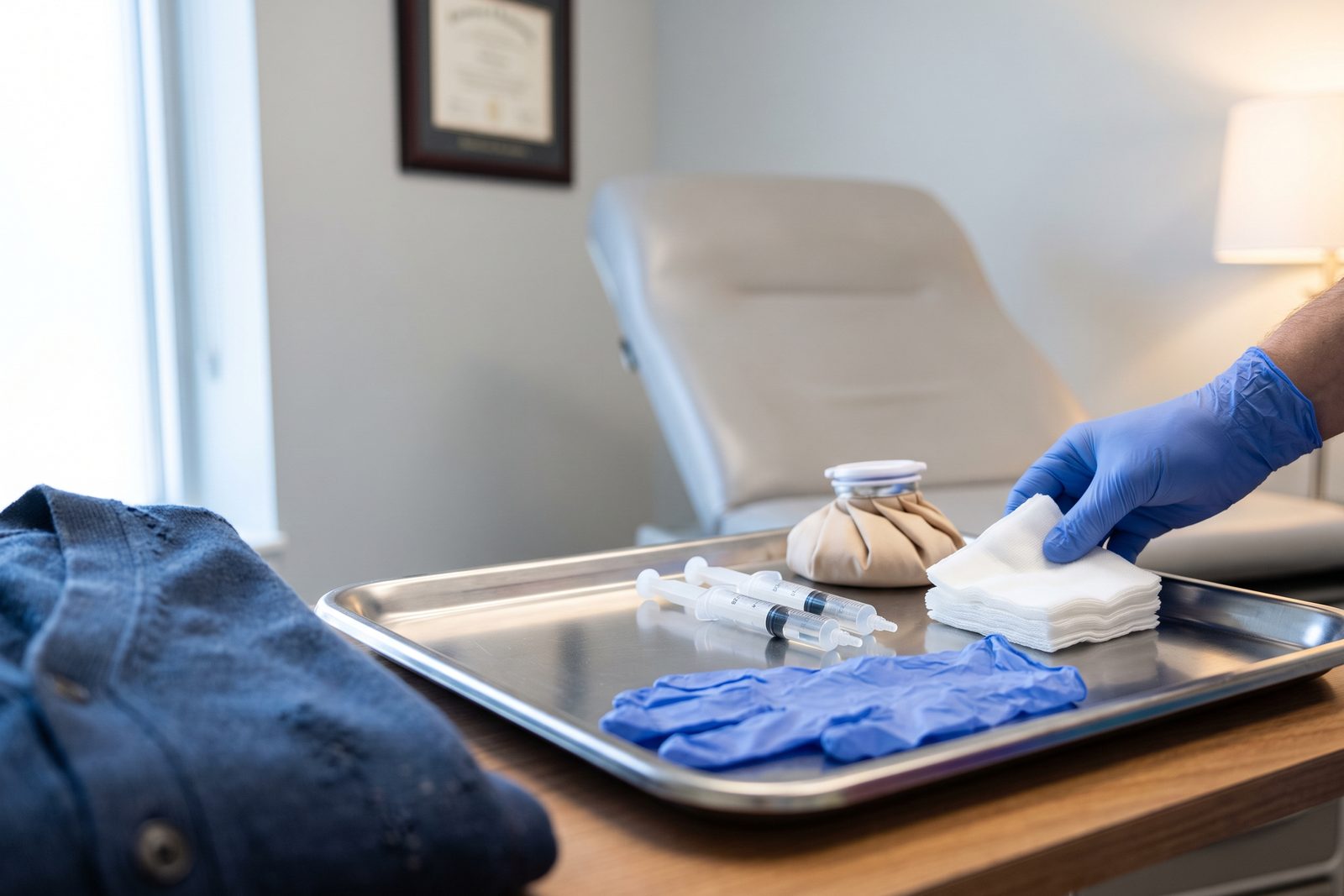
Is a liquid facelift worth it?
A liquid facelift is often worth it if you want a measured change without surgery, your concerns are mostly volume and lines, and you are comfortable budgeting for maintenance. It is less likely to be worth it if loose skin is your main concern or you want one long-lasting change. The honest test is whether the yearly cost and number of visits fit your life.
Run the numbers over two or three years, not one visit. Neuromodulator areas fade within months, most hyaluronic acid filler within about a year, and biostimulators last longer but take a series to build. Compare that with what a surgeon quotes for a facelift, including recovery time away from work. Some people choose injectables now and surgery later, and the two can work together.
If you are weighing it, bring a few photos of yourself from five to ten years ago and a short list of the changes that bother you most. That gives the visit a clear target and keeps the plan focused. Derm Clinic MD sees patients in Buckhead and Cumming, and you can book a consultation to get an itemized plan built around your face and your calendar.
Questions people ask
Is a liquid facelift the same as a non-surgical facelift?
In everyday use, yes. Both terms describe a plan of injectables, usually filler and a neuromodulator and sometimes a biostimulator, used instead of surgery. Neither is a single FDA-approved procedure. What matters is the specific products, areas and schedule in your plan, so ask for those details in writing rather than comparing names.
Does a liquid facelift hurt?
Expect some discomfort, which varies by area and by person. Some fillers contain lidocaine, which the FDA notes is intended to decrease pain or discomfort during injection, and ice or numbing cream may also be used. Pain and tenderness are among the common side effects the FDA lists. Your injector will tell you which comfort options they use.
How soon will I see a difference?
Filler changes are usually visible right away; the American Academy of Dermatology says most fillers provide immediate results, though early swelling can make the first days hard to judge. Most people see neuromodulator effects within 3 to 7 days. Biostimulators build gradually over several weeks, so a full plan can take a few months to come together.
Can a liquid facelift fix jowls?
Injectables may make early jowling less noticeable by adding volume in the cheeks or along the jaw, but they cannot remove heavy, loose skin. The American Society of Plastic Surgeons lists jowls among the changes a surgical facelift is designed to treat, so pronounced jowls usually call for a surgical opinion before you invest in injectables.
Is a liquid facelift FDA-approved?
The individual products are FDA-approved for specific areas and uses; the combination is not a single approved procedure, and some placements are off-label. The FDA notes that using fillers together with neuromodulators has not been evaluated in a controlled clinical study. Ask your injector which parts of your plan are on-label and which are not.
How often will I need touch-ups?
Expect to refresh the neuromodulator areas most often, hyaluronic acid filler less often, and biostimulators least often once the first series is complete, using the ranges in the table above as a rough guide. How long each part lasts for you depends on the product and the area treated, so note when each area starts to fade. Your injector will set the schedule based on how your face responds.
Can I get a liquid facelift before a big event?
Yes, with a buffer. Filler bruising and swelling can take days to weeks to settle, the neuromodulator part needs several days to take effect, and biostimulators build over weeks. Booking several weeks ahead leaves time for swelling to settle and for a follow-up visit if your injector wants to adjust anything.
Sources
- Average Plastic Surgery Costs (2022 Aesthetic Plastic Surgery National Databank). The Aesthetic Society, 2022 data. https://www.theaestheticsociety.org/patient-resources/cost/average-plastic-surgery-costs
- FDA-Approved Dermal Fillers. U.S. Food and Drug Administration, 2020. https://www.fda.gov/medical-devices/aesthetic-cosmetic-devices/fda-approved-dermal-fillers
- Dermal Fillers (Soft Tissue Fillers). U.S. Food and Drug Administration, 2023. https://www.fda.gov/medical-devices/aesthetic-cosmetic-devices/dermal-fillers-soft-tissue-fillers
- Botulinum toxin therapy: Overview. American Academy of Dermatology, accessed 2026. https://www.aad.org/public/cosmetic/wrinkles/botulinum-toxin-overview
- Botulinum toxin therapy: FAQs. American Academy of Dermatology, accessed 2026. https://www.aad.org/public/cosmetic/wrinkles/botulinum-toxin-faqs
- Start the new year off with a fresh start (and skin). American Academy of Dermatology news release, 2024. https://www.aad.org/news/start-the-new-year-off-fresh-skin
- Facelift Surgery. American Society of Plastic Surgeons, accessed 2026. https://www.plasticsurgery.org/cosmetic-procedures/facelift
- 2025 Procedural Statistics Release. American Society of Plastic Surgeons, 2025 data. https://www.plasticsurgery.org/documents/news/statistics/2025/plastic-surgery-statistics-report-2025.pdf
- Hyaluronidase for Dermal Filler Complications: Review of Applications and Dosage Recommendations. JMIR Dermatology, 2024. https://pmc.ncbi.nlm.nih.gov/articles/PMC10836581/
- Efficacy, Durability, and Safety of Collagen Biostimulators Based on Poly-L-Lactic Acid (PLLA) and Calcium Hydroxyapatite (CaHA) in the Face: A Systematic Review. Aesthetic Plastic Surgery, 2026. https://pubmed.ncbi.nlm.nih.gov/41184662/
This article is general education and is not medical advice. It does not replace an in-person consultation. Whether a treatment suits you, and what result is realistic, depends on your health history and an examination.
Derm Clinic MD · Last updated October 2026.