
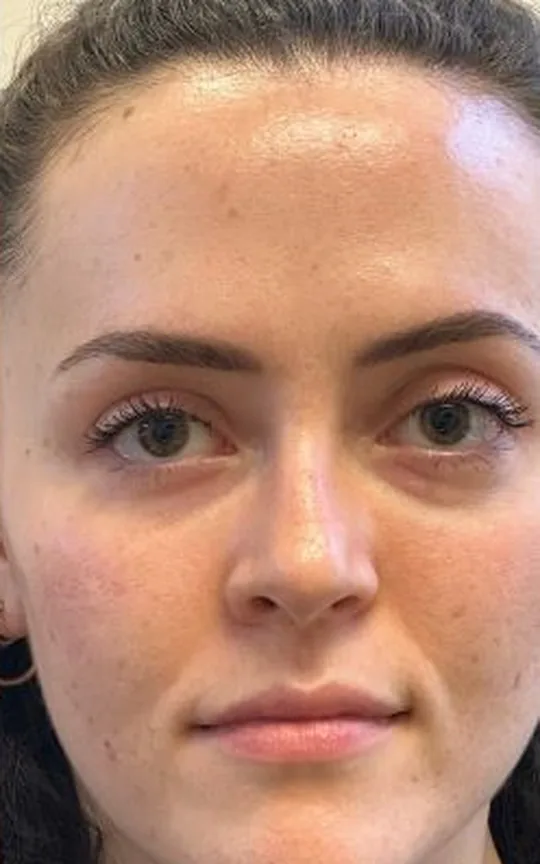
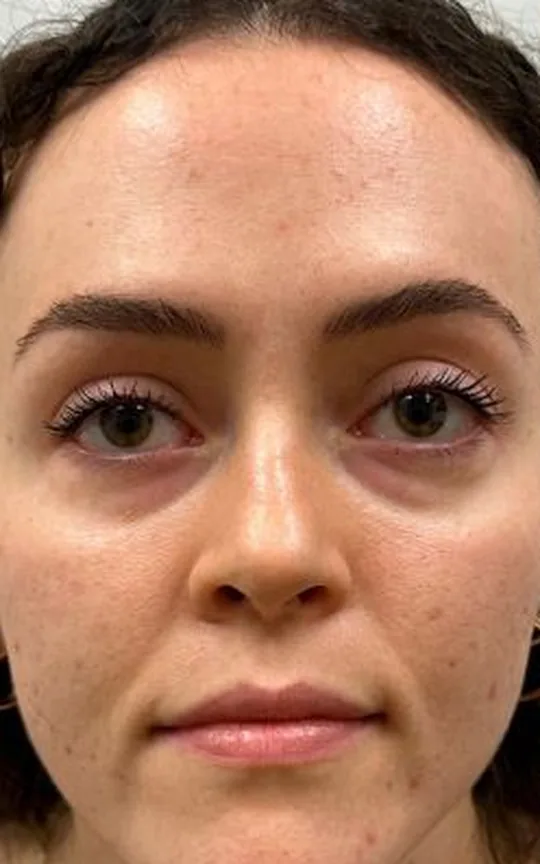
Tear Trough (Under Eye)Under eye filler (tear trough)Hair, background and lighting differ between the photos.
Dermal fillers
Under-eye filler, often called tear trough filler, is a hyaluronic acid gel placed in the hollow below the lower eyelid. The FDA has approved four fillers for the under-eye area in adults, most recently in 2026. The approvals are for hollowing, not dark pigment, puffy bags or loose skin, and the area is considered challenging to treat: lumps, a bluish tint, swelling and rare blocked blood vessels are real risks.
Treated by Dr. PaymanBuckhead and Cumming
What it treats
Under-eye filler treats infraorbital hollowing, the sunken area where the lower eyelid meets the cheek. The Restylane Eyelight trial defined it as the junction of the lower eyelid and midface where a volume deficit has formed. The approvals are for hollowing, not for dark pigment, eyelid puffiness, festoons or loose skin.
The dates and wording come from the FDA's records for Volbella XC, Restylane Eyelight, Belotero Balance (+) Lidocaine and RHA Redensity Eye. That is the FDA's list, not a list of what the office stocks; your injector will tell you which product is planned. The Eyelight trial excluded people with pigment-based dark circles, a tendency toward eyelid swelling, festoons, large or herniating fat pads, rosacea, uncontrolled severe seasonal allergies and lower lid retraction. Those exclusions mark where the evidence stops.
| Product | FDA decision | Approved for (FDA wording) |
|---|---|---|
| Juvederm Volbella XC | May 28, 2021 | Improvement of infraorbital hollowing, adults over 21 |
| Restylane Eyelight | May 8, 2023 | Improvement of infraorbital hollowing, patients over 21 |
| Belotero Balance (+) Lidocaine | September 27, 2023 | Volume augmentation for the infraorbital hollow, adults over 21 |
| RHA Redensity Eye | May 12, 2026 | Moderate to severe volume deficiencies in the infraorbital region, adults 22 or older |
Results
In the Restylane Eyelight trial, 87.4% of treated people (184 of 210) were rated improved at 3 months, against 17.7% of untreated controls, and 63.5% were still improved at 12 months. In the Juvederm Volbella XC trial the figures were 83.1% at 3 months and 73.4% at 12 months. Improved meant at least a 1-point gain on a rating scale, so the figures do not say how much.
The FDA's page on filler materials says hyaluronic acid effects last approximately 6 to 12 months, so keeping the look means repeat treatment. Both trials offered a touch-up about a month after the first visit, and everyone in the Eyelight trial was offered another treatment at 12 months.
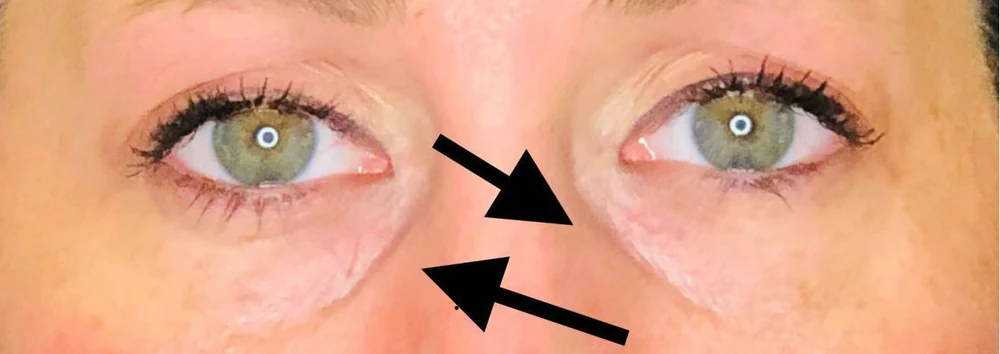 Before
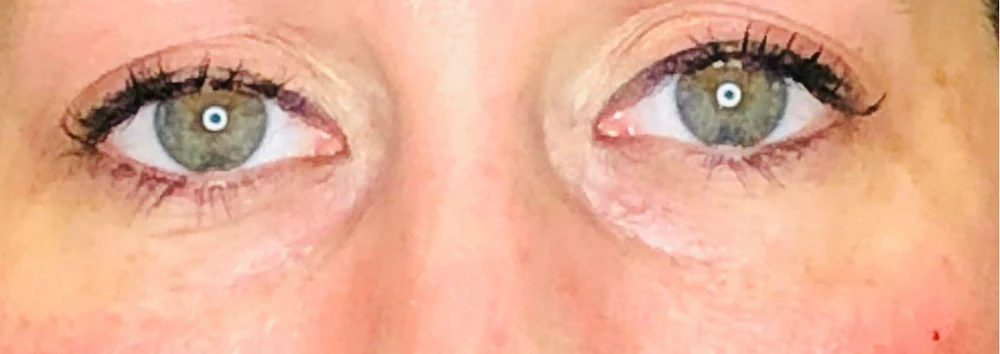 After
Drag the slider across each photo.Tap any photo to see it larger. These are Dr. Payman's own patients, shown with their written consent. These photos show individual results, not typical or guaranteed ones. Your result depends on your anatomy, the product, how much is used and how many visits you have. The number of visits and the time since treatment are not shown for most sets. See the full gallery.
Is it right for you?
Good candidates are adults over 21 whose main concern is a sunken, shadowed hollow under the eye, without pigment-based dark circles, puffy bags or recurring eyelid swelling. Wait, or ask first, if you are pregnant or breastfeeding, have an active infection or inflamed skin, or have a history of anaphylaxis, multiple severe allergies or allergy to lidocaine.
The Restylane Eyelight label adds that people with a tendency to swell may have excessive swelling, that darker skin (Fitzpatrick IV to VI) or abnormal wound healing may be more prone to hypertrophic scars and keloids, that studies of a similar gel in other areas reported 9% inflammatory hyperpigmentation in these skin types, and that injection after a previous herpetic eruption may be associated with herpes reactivation. Tell your injector about recent laser or peels, permanent implants near the eye, blood thinners and immune-suppressing therapy.
The Eyelight and Volbella XC trials enrolled people with moderate or severe hollows, so mild hollows are outside what was tested. A 2023 review lists transparent skin, prominent skin laxity, prominent or herniated fat pads, and eyelid or malar edema as less ideal for filler here, and says filler will not address hyperpigmentation, though it may reduce shadowing.

Who treats you
Board-certified physician with 13+ years in aesthetic medicine. Dr. Payman is the only provider at Derm Clinic MD, and she personally treats every patient. Every plan starts with a consultation, so it is made around your face and your goals.
Georgia medical license 61513 (NPI registry).
Read Dr. Payman's full bioYour visit
You start with an in-person consultation where Dr. Payman examines the area, reviews your history, allergies and medicines, and tells you whether filler fits or another approach would suit you better. If you go ahead, you consent, photos are taken, the filler is placed, and you leave with written aftercare instructions.
Ask any provider about their training, as the FDA suggests. Since a December 2023 labeling change, Restylane Eyelight is distributed only to users who have completed a device-specific training program.
Cost
Dr. Payman's office quotes your cost at the consultation, after the plan is made. For scale, the American Society of Plastic Surgeons reported a 2023 national average physician fee of $715 per procedure for hyaluronic acid fillers; fees vary by region and provider, and the figure does not say how much filler is included. Health insurance does not cover dermal fillers.
Because the under-eye area is small and challenging to treat, ask for a written plan that names the product, the amount, the price and whether a touch-up is included. Gold membership is $99 a month, saved toward dermal fillers; see membership and pricing. When you are ready, book a consultation at the Buckhead or Cumming office.
Gold membership
$99 a month, saved toward Botox, Jeuveau or dermal fillers
Six-month minimum, then month to month. A $99 fee applies if you cancel before six months.
Compare
A 2023 review notes that adding volume to the midface can improve the under-eye area and the overall result, so cheek filler is sometimes part of an under-eye plan. For true bags or excess skin, the same review lists lower eyelid blepharoplasty, a surgical procedure this office does not offer.
Start with what you see: a hollow, a bulge, a color change or loose skin each points a different way. See cheek filler and the Journal guide to who is a candidate for under-eye filler.
Safety
Swelling, bruising, tenderness and lumps are the common effects. In the Restylane Eyelight trial diary, 89.7% of people logged tenderness and 85.0% swelling, and over 63% of events cleared within 7 days. A 2024 meta-analysis of 31 reports pooled swelling at 19.2%, bruising at 18.4%, lumps at 5.3% and a bluish Tyndall effect at 0.9%.
The Eyelight label says injecting too superficially, or into areas with thin skin such as the periorbital area, may cause contour irregularities, palpable lumps and bluish discoloration. About 18% of the people who logged swelling, and the same share of those who logged bruising, said it affected their daily activities. The pooled rates are far lower than the diary figures. They come from published reports before September 2022, not a 28-day diary of every effect, and are not a rate for any one product or provider.
Safety
The most serious risk is filler entering a blood vessel, which the FDA says can cause tissue death, vision problems including blindness, or stroke, and the harm may be permanent. The Eyelight label says necrosis and scarring may occur after injection in or near vessels, such as in the periorbital area. Get immediate medical attention for unusual pain, vision changes, skin that turns white, gray or blue, or signs of a stroke.
The Eyelight FDA summary says blocked vessels causing tissue damage and visual disturbances including blindness have been reported after any soft tissue filler in the face, especially in the nose, glabella, periorbital areas, nasolabial folds and cheek. In the American Academy of Ophthalmology's review of 198 cases, emergency treatments including hyaluronidase were usually not effective at reversing vision loss, and vision was unchanged in 70% of the 196 cases with follow-up.
Late problems occur too. The Eyelight summary says delayed inflammation or granulomas, more than 2 years after treatment, have been reported in low numbers in the infraorbital region. Its list of reports after approval also includes infection or abscess, eyelid ptosis, dry eye, discoloration, scarring and herpes reactivation, and it calls serious events rare. The FDA's general filler page, current as of 07/06/2023, lists the periorbital area among uses it has not approved and does not mention the under-eye approvals above; outside an approved product and use, the risks are not known.
Patient reviews
“She is very kind and pays attention to my requests for minimal treatment”
“I only trust this clinic with my Botox and fillers.”
“Once I met with Dr Arshia Paymen I never felt rushed, she took the time to listen to all my concerns and explained it all in a way that was easy to understand.”
Excerpts are quoted word for word from public Google reviews of Derm Clinic MD. Individual results vary.
Questions
Short answers here. Your own plan, product and cost are set with Dr. Payman at your consultation.
Ask at a consultationMostly, but not exactly. A 2023 review describes the tear trough as one groove, running down and outward from the inner corner of the eye where the eyelid meets the cheek, and infraorbital hollowing as the broader U-shaped depression under the eye. The FDA uses the broader term. In everyday use the names overlap.
Filler is for hollows, not puffy bags. The FDA trial of Restylane Eyelight excluded people with large or herniating fat pads, festoons or a tendency toward eyelid swelling, and the Eyelight label says a tendency toward edema may lead to excessive swelling. For true bags, a 2023 review lists lower eyelid blepharoplasty, a surgery this office does not offer.
No area is without risk, and the under-eye area needs particular care: the Restylane Eyelight label says necrosis and scarring may occur after injection in or near vessels, such as in the periorbital area. In the American Academy of Ophthalmology's review of 198 reported cases of vision loss after filler, the nose accounted for 40% of injection sites, the forehead 25% and the area between the brows 12%. These are case reports, not rates.
Approved under-eye fillers are hyaluronic acid gels. The Restylane Eyelight label describes hyaluronic acid generated by Streptococcus bacteria, chemically crosslinked with BDDE, at 20 mg/mL with 0.3% lidocaine. Hyaluronidase, an enzyme, can break hyaluronic acid filler down if it needs to be corrected.
Yes. Hyaluronic acid filler can be degraded with hyaluronidase, an enzyme, and a 2024 review describes its use for the Tyndall effect, nodules and allergic reactions, with immediate treatment for a blocked vessel. The office offers dissolving filler as its own treatment.
It can if your dark circles come from pigment rather than a hollow. The Restylane Eyelight label warns that injection in people with pigmented dark lower-eyelid circles may be associated with more prominent discoloration, and its FDA trial excluded pigment-based dark circles. A bluish Tyndall effect was also reported in 0.9% in a 2024 meta-analysis of hyaluronic acid injections in the tear trough.
Some discomfort is common. In the diary kept in the Restylane Eyelight FDA trial, 59.8% of people logged pain, including burning, and 89.7% logged tenderness. The Eyelight gel contains 0.3% lidocaine, a local anesthetic. Ask what numbing is planned and what to expect afterward.
Two offices

Monday to Friday 8:30 AM to 5 PM; Saturday 8:30 AM to 2:30 PM

Monday to Friday 8:30 AM to 5 PM; Saturday 8:30 AM to 2:30 PM
Maps © OpenStreetMap contributors.
Keep exploring
Your first step
Book a consultation in Buckhead or Cumming and leave with a plan that fits your face, your goals and your budget.
This page is general education and is not medical advice. It does not replace an in-person consultation. Whether a treatment suits you, and what result is realistic, depends on your health history and an examination. Results vary from person to person.
Derm Clinic MD · Last updated October 2026.