
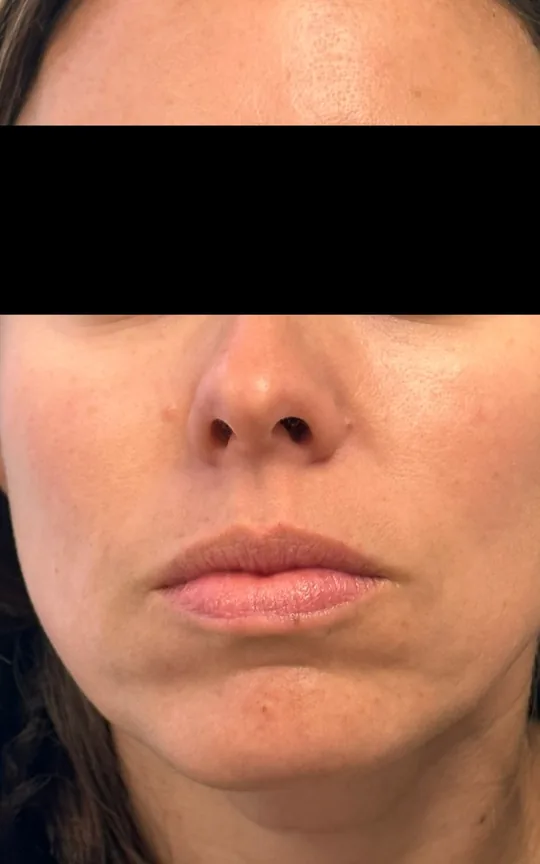
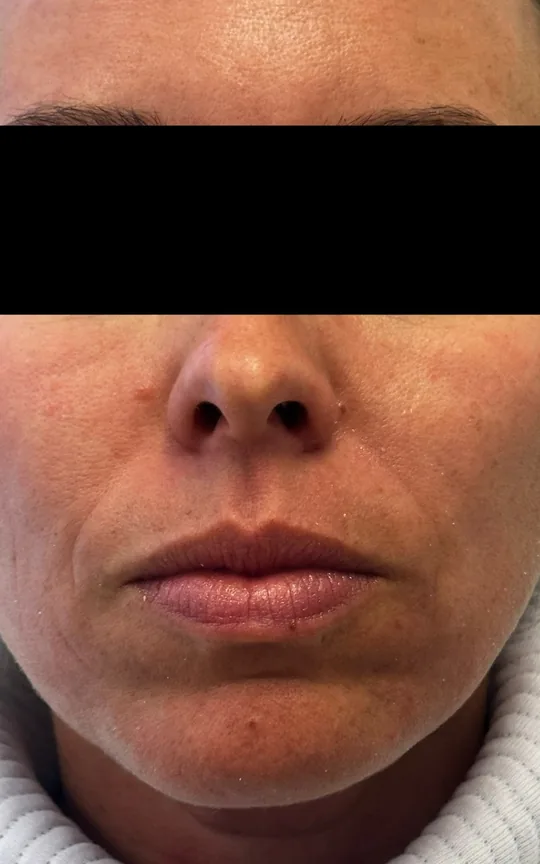
Skin Booster (Skinvive)Skinvive skin boosterClothing, hair and lighting differ between the photos.
Skin quality
SkinVive is a hyaluronic acid gel injected into the skin to improve smoothness rather than add volume, and it is the skin booster offered at Derm Clinic MD. The FDA approved it in 2023 to improve cheek skin smoothness and in June 2026 to reduce neck lines, in adults over 21. In the trials, results lasted up to six months in most people, so repeat treatments are usually needed.
Treated by Dr. PaymanBuckhead and Cumming
What it treats
'Skin booster' is a loose term for injectables placed into the skin to improve its quality, and the products behind it vary widely. SkinVive by Juvéderm is the one offered here. Its FDA labeling covers intradermal injection to improve skin smoothness of the cheeks, and intradermal and/or subdermal injection to reduce neck lines, in adults over 21.
The FDA approved SkinVive for the cheeks on May 11, 2023 and for neck lines on June 11, 2026. It is a hyaluronic acid gel, and the FDA reviewed it as an injectable dermal filler, yet its labeled purpose is smoother skin, not volume. A 2024 review in Archives of Plastic Surgery describes injectable skin boosters as varying widely in composition and aimed at dullness, dehydration and loss of elasticity. Use on other areas, such as under the eyes, the forehead or the hands, is off-label: the label says safety and effectiveness elsewhere have not been established in controlled clinical studies.
Results
In the pivotal studies, results lasted up to six months in most participants, and the patient information says repeat treatments are usually needed. One month after treatment, 57.9% of treated people in the cheek study and 74.8% in the neck study were responders, against 4.5% and 16.1% of untreated people.
A responder improved by at least one grade on a five-grade scale, as judged by a blinded evaluator. At six months, 55.6% of treated people in the cheek study and 66.0% in the neck study were still responders (observed cases), so a sizeable share did not reach a one-grade improvement, and follow-up before the repeat treatment stopped at six months. The label calls responder rates consistent across subgroups, but in the cheek study the age groups differed at one month, 82.4% under 50 (14 of 17) versus 46.9% over 60 (23 of 49), and these groups were small.
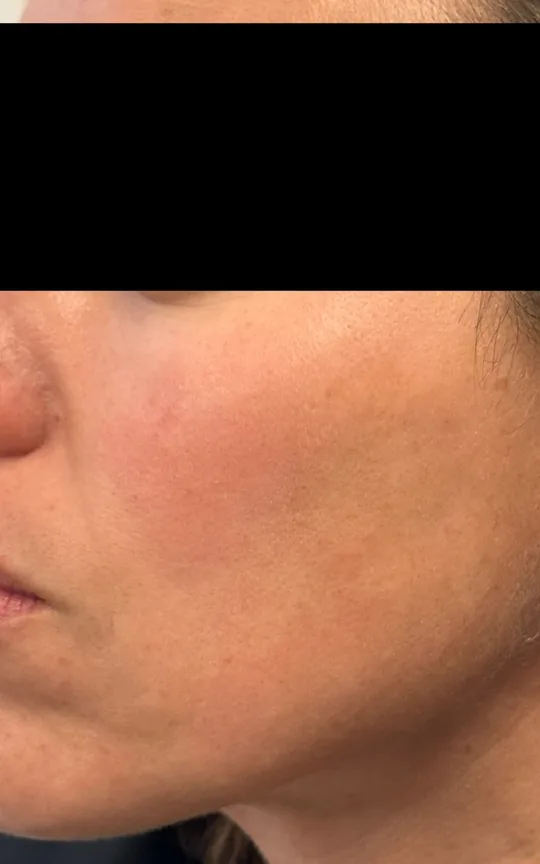
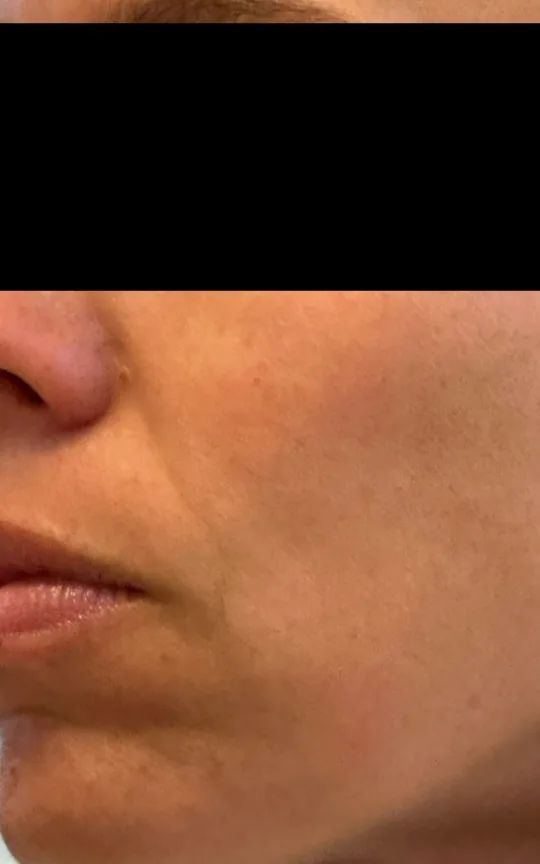
Drag the slider across each photo.Tap any photo to see it larger. These are Dr. Payman's own patients, shown with their written consent. These photos show individual results, not typical or guaranteed ones. Your result depends on your anatomy, the product, how much is used and how many visits you have. The number of visits and the time since treatment are not shown for most sets. See the full gallery.
Is it right for you?
SkinVive suits adults over 21 who want smoother cheek skin or fewer horizontal neck lines and accept a modest, temporary change. The labeling says not to use it with severe allergies including anaphylaxis, an allergy to gram-positive bacterial protein material, or a lidocaine allergy, and to defer treatment where acne, a rash or an infection is present.
SkinVive is not a treatment for skin disease. For a rash, eczema or acne medication, see a dermatologist; this office does not offer medical dermatology. In the cheek study, the median age was 58 and 81.5% of treated participants were women, and 96.2% were women in the neck study, so ask how those results apply to you.
Tell Dr. Payman first if any of these apply

Who treats you
Board-certified physician with 13+ years in aesthetic medicine. Dr. Payman is the only provider at Derm Clinic MD, and she personally treats every patient. Every plan starts with a consultation, so it is made around your face and your goals.
Georgia medical license 61513 (NPI registry).
Read Dr. Payman's full bioYour visit
A SkinVive visit starts with an in-person consultation, photos and consent. The gel is injected into the skin of the chosen area in small amounts, and an optional touch-up is often scheduled about a month later. Afterward, the label asks you to avoid makeup for 12 hours and to minimize strenuous exercise, extensive sun or heat, and alcohol for the first 24 hours.
Cost
Derm Clinic MD quotes your SkinVive cost at the consultation, after the plan is made, because the amount of product and the areas treated depend on you. Ask whether the quote includes the optional touch-up, which roughly 7 in 10 trial participants had, and when a repeat treatment would be due. This page lists no dollar range.
Repeat treatments were offered at six months in the trials, so think about the cost over a year, not one visit. Read our first consultation guide for what to ask, see pricing, ask whether Gold membership ($99 a month, with 10% off other services and skincare) applies, and book a consultation at either office.
Your exact cost
Your total depends on your plan: the areas, the product and how many visits you need. Dr. Payman gives you the full cost at your consultation, before anything is done.
Gold members get 10% off other services and skincare. About the membership.
Compare
SkinVive differs from other treatments by its goal: the label covers skin smoothness of the cheeks and neck lines, not volume loss, muscle activity or skin resurfacing. The FDA's review for neck lines lists other fillers, botulinum toxin, laser treatments, energy-based devices and suture lifts among alternatives, each with its own advantages and disadvantages.
Related options at this office include microneedling, chemical peels, PRP facial and laser resurfacing, and dermal fillers for lost volume. Your consultation sorts out which goal comes first. If sagging neck skin is your main concern, the ASPS says a neck lift can only be performed surgically and that nonsurgical treatments cannot achieve the same results, so a surgical opinion may serve you better.
Safety
Most people have short-term injection site responses: redness, lumps or bumps, swelling, bruising, pain, tenderness, firmness, discoloration and itching. The label calls most of them mild and short lasting. Rare serious risks include injection into a blood vessel, which can cause vision loss, stroke or tissue damage, and infection.
In the cheek study, 79.4% of 199 treated people recorded at least one such response after the first session, including lumps or bumps (63.3%), swelling (61.3%) and bruising (57.8%). For 22.1% a response lasted 15 to 30 days and for 9.5% more than 30 days, and lumps or bumps lasted more than 30 days in 8.0%. Three people (1.5%) had mild or moderate lumps that took 12 to 15 months to resolve. In the neck study of 147 diary reporters, 89.8% recorded a response, 7.5% had one lasting more than 30 days, and lumps or bumps lasted more than 30 days in 6.8%.
Investigator-recorded adverse events judged related to treatment were uncommon in the US studies: 3.0% in the cheek study and 3.4% in the neck study. A French study in the label, using a version without lidocaine, recorded them in 16.0% of 131 people, most often injection site masses (9.2%). Tell your injector about any planned laser treatment or peel, because the label warns of a possible inflammatory reaction at the treated site.
The label's postmarket list, drawn from reports worldwide, includes nodules, inflammatory nodules, vascular occlusion, tissue death (necrosis), abscess, scarring, device migration and vision changes, and no vascular occlusion was reported for the neck. Seek emergency care for changes in vision, signs of a stroke, white skin or unusual pain during or soon after treatment, and call the office about redness or swelling lasting more than a few days or any side effect weeks or months later, as the patient information advises. It also notes that delayed-onset inflammation near filler has been reported after viral or bacterial illness, vaccination or dental procedures, and typically responded to treatment or resolved on its own.
Patient reviews
“Once I met with Dr Arshia Paymen I never felt rushed, she took the time to listen to all my concerns and explained it all in a way that was easy to understand.”
“Dr. Payman was very friendly and explained everything thoroughly.”
“She takes time to truly listen to you and explains her treatment plan with great clarity.”
Excerpts are quoted word for word from public Google reviews of Derm Clinic MD. Individual results vary.
Questions
Short answers here. Your own plan, product and cost are set with Dr. Payman at your consultation.
Ask at a consultationNo. SkinVive is a hyaluronic acid gel injected into the skin. The FDA reviewed it as an injectable dermal filler device, but its labeled purpose is smoother cheek skin and fewer neck lines, not added volume. Botox is a different type of treatment; see Botox and dermal fillers for how each works.
The gel contains lidocaine, and in the neck study participants rated procedural pain at an average of 1.9 on a scale from 0 to 10 right after injection, which the label calls minimal. Soreness, tenderness and swelling afterward are common. Your doctor may also use ice or a numbing agent; your injector will tell you which.
SkinVive is hyaluronic acid, and the patient information lists hyaluronidase, an enzyme that breaks down hyaluronic acid, among medicines a physician may choose to treat side effects that persist. Whether that fits depends on the problem, so call the office rather than judging it yourself. Dissolving filler is a service this office offers.
Ask first. The label says that if laser treatment, chemical peeling or any other procedure based on active dermal response follows SkinVive, there is a possible risk of an inflammatory reaction at the implant site, and the same applies if SkinVive is given before the skin has healed from one. Your injector can sequence the treatments.
SkinVive is approved to improve cheek skin smoothness and reduce neck lines, not to tighten or lift skin. If sagging is your main concern, the ASPS says only surgery reaches the results of a neck lift. A consultation can tell you whether any treatment here fits or whether to seek a surgical opinion.
Those uses are off-label. The label says SkinVive is intended for improving skin smoothness of the cheeks and reducing neck lines, and that safety and effectiveness in other areas of the body have not been established in controlled clinical studies. Ask your injector what they recommend and why.
In the cheek study, 12.6% of treated participants were Fitzpatrick type V or VI. The label reports consistent responder rates across subgroups, but the numbers are very small (4 of 9 type V and 4 of 6 type VI at one month). The label also says safety in people with pigmentation disorders has not been studied, and the patient information says use in them may change pigmentation. Tell your injector about any history of dark marks or scarring.
Two offices
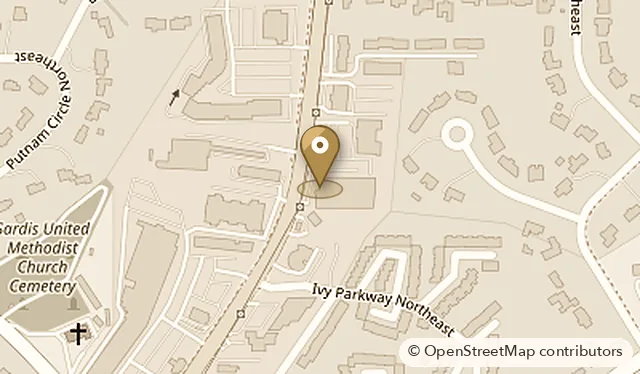
Monday to Friday 8:30 AM to 5 PM; Saturday 8:30 AM to 2:30 PM
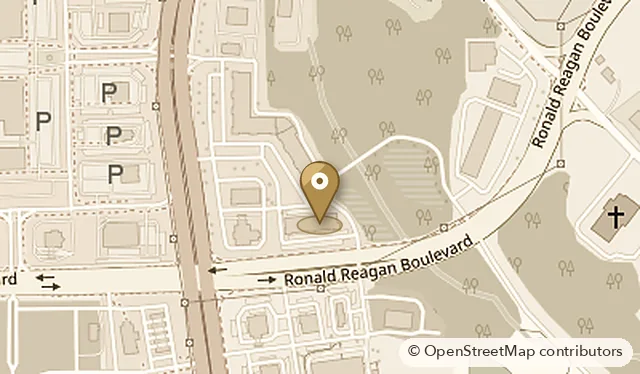
Monday to Friday 8:30 AM to 5 PM; Saturday 8:30 AM to 2:30 PM
Maps © OpenStreetMap contributors.
Keep exploring
Your first step
Book a consultation in Buckhead or Cumming and leave with a plan that fits your face, your goals and your budget.
This page is general education and is not medical advice. It does not replace an in-person consultation. Whether a treatment suits you, and what result is realistic, depends on your health history and an examination. Results vary from person to person.
Derm Clinic MD · Last updated October 2026.