
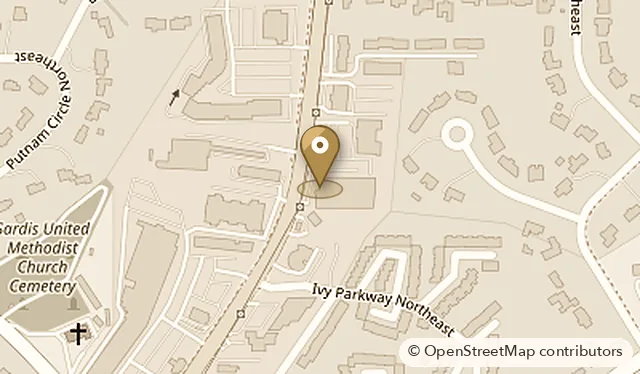
Atlanta (Buckhead)
3833 Roswell Rd NE, Tuxedo Atrium, Suite 108Atlanta, GA 30342
Floor 1 of the Tuxedo Atrium
Monday to Friday 8:30 AM to 5 PM; Saturday 8:30 AM to 2:30 PM
Skin quality
Acne scar treatment makes indented scars shallower and skin texture smoother, but it rarely erases a scar. Microneedling, chemical peels, laser resurfacing and filler each suit different scar types, and plans often combine two or more over several months. Treatment usually begins once acne is under control. Derm Clinic MD treats the scars; active acne itself needs a dermatologist.
Treated by Dr. PaymanBuckhead and Cumming

What it treats
Treatment can make indented acne scars shallower and smooth rough texture, and many people see clear improvement over a series of visits. It rarely removes a scar completely. The American Academy of Dermatology (AAD) says some treatments make scars look less noticeable while others smooth wavy texture.
Microneedling uses tiny needles to puncture the skin, and the body answers by making new collagen. A peel helps the body produce collagen and elastin, and the AAD says a mild peel may need 3 to 5 treatments given every 2 to 4 weeks. Laser resurfacing also works through healing, but the AAD cautions that a laser cannot get rid of a scar, only replace it with a less noticeable one. Derm Clinic MD offers microneedling, chemical peels and laser resurfacing.
Filler adds volume under a depressed scar and may prompt some collagen, but the AAD says most filler results are temporary, lasting 3 months to 2 years, and need touch-ups. The FDA says non-absorbable fillers are approved for only nasolabial folds and cheek acne scars, so ask which filler would be used and whether that use is approved or off-label. See dermal fillers for the filler families the office offers.
Results
Most plans are a series, not one visit. For acne scars the AAD says microneedling often takes 3 to 5 treatments spaced 2 to 4 weeks apart, and results appear gradually, with full results usually taking several months. Expect improvement, not erasure.
Studies favor combined plans, though they disagree on which combination leads. A 2024 network meta-analysis of 24 randomized trials ranked microneedling plus a chemical peel ahead of microneedling alone, peels alone and laser. A 2026 network meta-analysis of 56 trials (1,488 patients) found combinations generally outperformed single treatments, with laser plus subcision or PRP the most consistent. In a 2022 trial of 60 people with Fitzpatrick types IV to VI, 73% of the microneedling group improved by more than one scar grade, against 33% with glycolic acid peels. Rankings across trials are a hint, not a promise.
The AAD says a yearly maintenance microneedling session may be advised. For a week-by-week view, see the microneedling results timeline. Ready to talk it through? Book a consultation at either office.
Is it right for you?
Wait if you have active breakouts, a skin infection, a cold sore outbreak, a tan or sunburn, or plan to be in the sun in the next two weeks. The FDA also lists bleeding disorders, a weakened immune system, pregnancy and breastfeeding as reasons microneedling may not suit you. Treating active acne is medical dermatology, which Derm Clinic MD does not offer.
The AAD says scar treatment typically begins once acne is under control. It also says to report every acne treatment used in the last two years, because starting some scar treatments while using, or soon after stopping, certain acne medicines can cause unwanted side effects.
Isotretinoin, a prescription acne pill, is the clearest case, and sources give different waits. For microneedling, the AAD says at least one month must pass after the last pill, while the FDA lists use in the past 6 months as a reason it may not suit you. The isotretinoin drug label says to avoid skin-smoothing procedures such as dermabrasion and laser during treatment and for at least 6 months after, and the 2010 review describes waits of 6 months to a year before peels and ablative laser. Tell the office your last dose date; the physician sets any wait, and your prescriber decides your acne medicine.
The FDA list also includes keloid history, eczema, psoriasis, vitiligo, autoimmune disease, blood thinners, uncontrolled diabetes and steroid, chemotherapy or radiation treatment. It names darker skin type too, citing a risk of darkening or lightening. The AAD advises people with skin of color to seek peel expertise with darker tones, since pigment problems can become permanent, and a 2026 meta-analysis found fractional CO2 laser carried about three times the risk of post-inflammatory hyperpigmentation of standard microneedling.

Who treats you
Board-certified physician with 13+ years in aesthetic medicine. Dr. Payman is the only provider at Derm Clinic MD, and she personally treats every patient. Every plan starts with a consultation, so it is made around your face and your goals.
Georgia medical license 61513 (NPI registry).
Read Dr. Payman's full bioYour visit
Every treatment starts with an in-person consultation. Dr. Payman examines your scars, asks about your acne history, skin and medicines, and builds a plan around scar type, skin tone, downtime and goals. Treatment then runs over several visits.
Preparation can start weeks early: the AAD describes a 2 to 4 week skin care routine before microneedling and 'pre-peel priming' before a peel. Follow only your written plan, and do not start or stop a prescription on your own. If breakouts are active, see a dermatologist for the acne first. See medical-grade skincare and aftercare.
Cost
Cost depends on your scar types, how much skin is involved, the treatments in your plan and how many sessions it takes. Derm Clinic MD quotes your cost at the consultation, after the plan is made. The AAD notes that medical insurance does not cover the cost of acne scar treatment.
Because scar plans run across several visits, ask for the total for the series rather than one session, and what maintenance involves. See pricing for how the office prices treatment and membership for member savings on other services and skincare.
Your exact cost
Your total depends on your plan: the areas, the product and how many visits you need. Dr. Payman gives you the full cost at your consultation, before anything is done.
Gold members get 10% off other services and skincare. About the membership.
Compare
The right treatment depends on the scar type, and many people have more than one type. Reviews describe acid applied to single ice pick scars, laser for boxcar and rolling scars, and minor surgery such as punch excision for some deep scars, so combined plans are common.
| Scar type | Options described | Honest limit |
|---|---|---|
| Ice pick | Acid on single scars, punch excision, repeated peels | Peels cannot clear them completely; the 2010 review says TCA peels are not indicated for dark skin |
| Boxcar | Acid on single scars, laser resurfacing | Isolated scars can improve significantly with acid (2010 review) |
| Rolling | Laser resurfacing, often in combined plans | Peels cannot clear them completely (2010 review) |
| Any indented scar | Microneedling, peels, laser, filler, often combined (AAD) | Rarely erased |
| Raised | Laser, injected or prescription medicine (AAD) | Keloids can return |
The table draws on the 2001 classification paper, the 2010 review and the AAD. Punch excision and similar scar surgery are not offered at Derm Clinic MD. If your scars call for that, a dermatologist or dermatologic surgeon is the next step.
Good to know
These are the three common shapes of indented (atrophic) acne scars. Ice pick scars are narrow (under 2 mm) and deep, boxcar scars are round or oval with sharp vertical edges, and rolling scars are broad dips, usually wider than 4 to 5 mm, with a wavy look. The AAD says ice pick scars need different treatment than rolling scars, so naming your mix comes first.
Not every scar is an indent. The AAD notes a scar can be a depression or a raised scar, often with some discoloration. Raised scars form when the body makes too much collagen, so they need different treatment.
Safety
After microneedling, common effects are redness, dryness, tightness, itching and peeling, which usually settle within days. Less common are pigment changes, cold sore flare-ups and infection, and the FDA says some side effects may be permanent. Sun on freshly treated skin raises the risk of discoloration and, after laser, another scar.
The FDA's microneedling page lists dryness, rough skin, tightness, redness, itching, peeling, burning, bruising, bleeding and crusting as common, and pigment changes, cold sore reactivation and infection as less common. It says most side effects occur shortly after treatment and resolve, some may be permanent, and a procedure may not give the result you want.
With peels, the AAD lists redness that can last for months, temporary darkening, lighter skin color after medium and deep peels and scarring, which it calls very rare when a dermatologist performs the peel. With lasers, it warns that sun on treated skin can cause another scar. If filler is part of your plan, the FDA calls injection into a blood vessel the most concerning filler risk, with complications that include tissue death, blindness and stroke. Get immediate medical attention for vision changes, unusual pain or white, gray or blue skin after filler. Call the office for spreading redness, pus, fever, blistering or a cold sore outbreak.
Patient reviews
“Once I met with Dr Arshia Paymen I never felt rushed, she took the time to listen to all my concerns and explained it all in a way that was easy to understand.”
“Dr. Payman was very friendly and explained everything thoroughly.”
“She takes time to truly listen to you and explains her treatment plan with great clarity.”
Excerpts are quoted word for word from public Google reviews of Derm Clinic MD. Individual results vary.
Questions
Short answers here. Your own plan, product and cost are set with Dr. Payman at your consultation.
Ask at a consultationUsually not. A 2010 review (Fabbrocini et al.) says peeling cannot completely clear ice pick and rolling scars, and the American Academy of Dermatology says laser treatment cannot get rid of a scar. A realistic goal is shallower scars and smoother texture, and some respond more than others.
Ice pick scars are narrow and deep, so surface treatments reach them less well. Reviews describe acid on single scars, punch techniques and repeated peels. Punch excision is minor surgery, which this office does not offer, so a deep ice pick pattern may need a dermatologist.
The American Academy of Dermatology calls microneedling suitable for all skin tones, and a 2022 trial (Ishfaq et al.) enrolled Fitzpatrick types IV to VI. The FDA still lists darker skin as a caution because skin can darken or lighten. Mention past dark marks or keloids.
Microneedling redness and a sunburn-like feeling usually fade in a few days to a week, and the AAD advises waiting 24 hours before makeup. Peels and lasers vary with depth. Plan around sun for the following two weeks.
No. The AAD says at-home and non-medical spa products are not meant to puncture skin, so results are less noticeable, and at-home use can spread warts and herpes. Pressing too hard can leave scars or color changes.
The AAD says studies show PRP used with another treatment like microneedling can lead to less visible scarring. But the FDA says microneedling devices are not approved for delivering blood products such as PRP into the skin, and the risks of such combinations are not known. Ask what is planned. See the PRP and PRF facial page.
Two offices
Monday to Friday 8:30 AM to 5 PM; Saturday 8:30 AM to 2:30 PM

Monday to Friday 8:30 AM to 5 PM; Saturday 8:30 AM to 2:30 PM
Maps © OpenStreetMap contributors.
Your first step
Book a consultation in Buckhead or Cumming and leave with a plan that fits your face, your goals and your budget.
This page is general education and is not medical advice. It does not replace an in-person consultation. Whether a treatment suits you, and what result is realistic, depends on your health history and an examination. Results vary from person to person.
Derm Clinic MD · Last updated October 2026.