

A pebble chin is a dimpled, orange-peel chin surface caused mainly by an overactive mentalis muscle, whose fibers attach directly to the chin skin. Botox can relax that muscle and temporarily smooth the dimpling. A 2023 anatomy review warns that toxin reaching nearby lip muscles can affect lip closure and smile symmetry.
What causes a pebble chin?
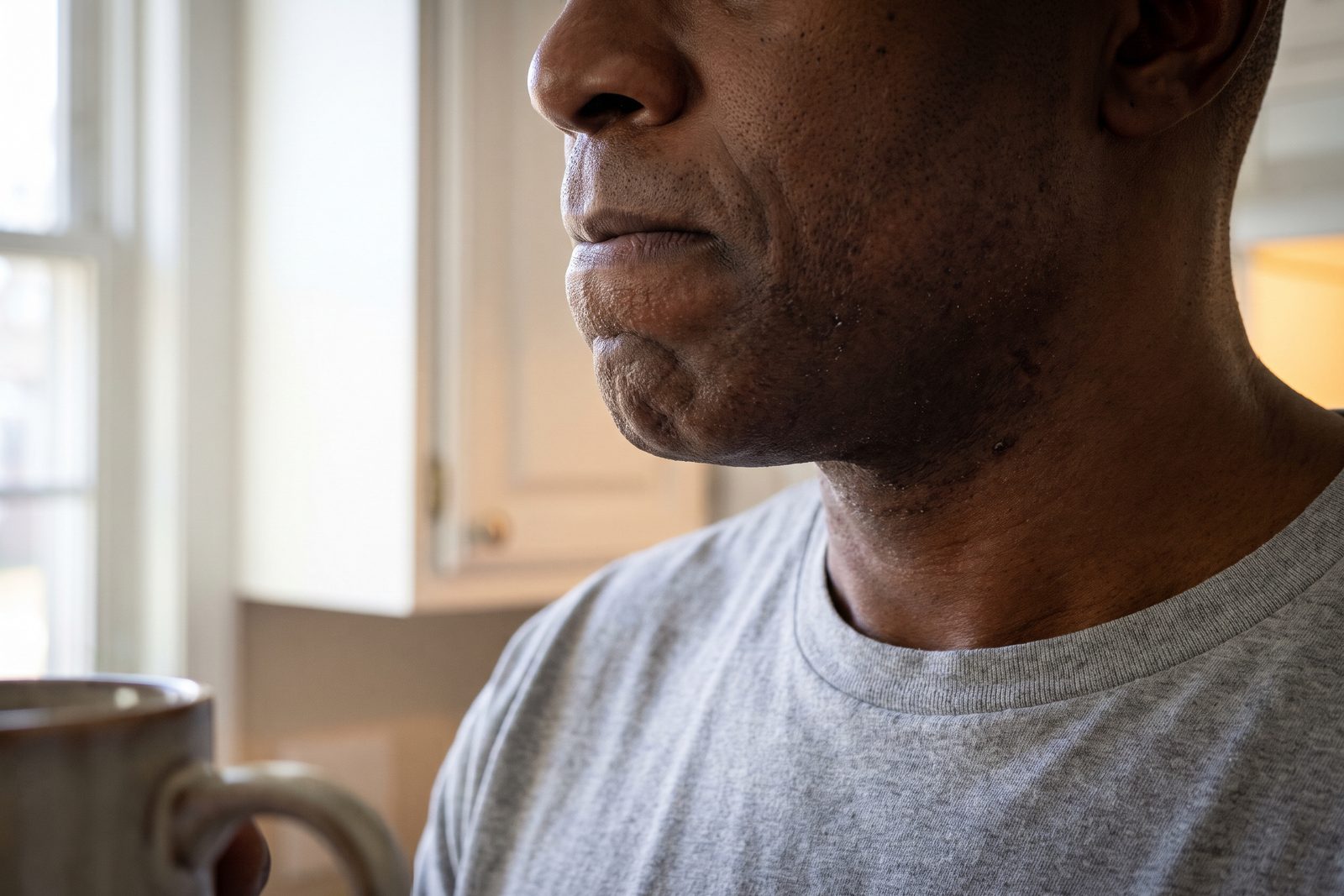
A pebble chin is a chin whose skin puckers into small dimples, like orange peel or a golf ball, usually when the mentalis muscle contracts. According to a 2023 anatomical review in Anatomy and Cell Biology, the cobblestone look comes from mentalis hyperactivity, because the muscle inserts some of its fibers directly into the skin of the chin.
Cleveland Clinic describes the mentalis as a muscle toward the center of your chin that helps control your lower lip. The 2023 review adds that it lifts the chin and lower lip, which is why the dimpling shows most when you talk, drink, pout or press your lips together. It also notes that years of repeated contraction help form the mental crease, the groove between the lower lip and the chin.
With age the pattern can settle in. The review describes how a dynamic cobblestone look can become an orange-peel texture that stays at rest, as fat and collagen in the chin thin. That difference matters for treatment: dimpling that shows only with movement responds to muscle relaxation, while texture that stays at rest often needs skin or volume treatment as well.
Why does the chin muscle work so hard?
The chin muscle often works hard because it is compensating. The 2023 anatomical review notes that mentalis hyperactivity appears in a shortened chin, and a 2000 electromyography study of 36 people found mentalis activity was a better marker of lip sealing than the other lip muscles it measured. When the lips have to strain to close, the mentalis does the straining, and the chin dimples.
That 2000 study also found the vertical height of the face and the tilt of the front teeth appear to affect how the lower lip works, which is why a bite or jaw issue can sit behind a dimpled chin. A 2001 report on three patients described chin dimpling and soft-tissue droop after failed chin augmentation surgery, which eased while the toxin was working.
A quick self-check helps. Let your lips fall gently apart and relax your jaw. If the dimples disappear and return only when you close your lips or pout, the muscle is the main driver. If your lips will not meet without effort, or your chin sits well behind your lower lip in profile, ask about your bite and chin projection before treating the muscle.
| What you notice | Likely driver | What usually comes first |
|---|---|---|
| Dimples only when you talk, drink or pout; smooth at rest | Overactive mentalis | Botox to relax the muscle |
| Dimpling plus a deep groove under the lower lip | Muscle plus volume loss | Botox, sometimes with filler, planned together |
| Lips strain to close, or the chin sits back in profile | Short chin or bite | Chin filler or a dental and orthodontic opinion first |
| Orange-peel texture that stays at rest | Thinning skin and fat | Muscle relaxation plus skin treatment |
| Dimpling that began after chin surgery | Muscle changed by surgery | A review with your surgeon first |
Can Botox smooth a pebble chin?
Botox can smooth a pebble chin when muscle drives the dimpling. In a 2005 placebo-controlled study, Botox injected into one side of the chin produced a difference doctors and patients could see, at rest and at full contraction. A 2026 Italian expert consensus named the orange-peel chin as a primary reason to treat the mentalis.
A split-chin study treats one half of the chin with the drug and the other half with saline, so each person's own face is the comparison. The 2005 study used that design, which means the difference doctors and patients saw was measured against the untreated side of the same chin. Most other chin evidence comes from anatomy studies, small case reports and the 2026 consensus, so how your own chin responds is usually judged after a smaller first treatment has settled.
The 2005 study was small, 20 people, and its split-chin design had a cost: 11 were satisfied, and the authors put the lower satisfaction down to the uneven look of treating only one side. What it shows is that the muscle responds. A small treatment softens the puckering when you move; it does not add projection to a short chin or fill a deep groove.
A consultation is the place to ask. Dr. Payman sees patients in Buckhead and Cumming.
Where is Botox injected for chin dimpling?
Botox for chin dimpling goes into the mentalis, a small, mostly dome-shaped muscle in the center of the chin. A 2021 cadaver and ultrasound study found the muscle mostly 5 to 10 mm either side of the midline, and the 2023 anatomical review recommends precise placement in the mentalis because complications occur when toxin reaches the neighboring lip muscles.
Each side of the mentalis is small, about 2.0 cm long and 1.2 cm wide on average according to that review, and its outer fibers mingle with the depressor labii inferioris, which Cleveland Clinic describes as a chin muscle that helps control movement in your lower lip. The orbicularis oris, the ring of muscle that closes and purses your lips, sits just above. Keeping the effect inside the mentalis keeps it off the lips.
The 2026 Italian consensus favored combining injections into the muscle with very superficial ones into the skin over it. Exact placement and dose are your injector's decision, based on how strongly and where your muscle moves, so expect to be asked to pout, talk and close your lips before anything is marked.
What are the risks of Botox for a pebble chin?
The main risks of Botox for a pebble chin involve the lower lip. According to the 2023 anatomical review, toxin that spreads into neighboring lip muscles can cause trouble closing the mouth fully and an uneven smile from a drooping lower lip. A 2020 case report also described paradoxical bulging of the chin when only part of the muscle relaxed.
These effects are temporary, but they can make drinking, speaking clearly or smiling feel odd until the toxin wears off. The review recommends precise placement and a lower amount for a first treatment, which matches the general rule that more can be added later but none can be taken away. The 2020 bulge was corrected with a supplementary injection into the fibers still working.
The Botox Cosmetic boxed warning applies to the chin as it does anywhere: toxin effects can spread beyond the injection site hours to weeks later, and trouble swallowing, speaking or breathing needs urgent medical care. The label also warns that people with nerve or muscle disorders such as myasthenia gravis may be at higher risk of serious effects.
When is filler or a dental review the better first step?
Filler or a dental review comes first when the chin is short or the lips cannot close without strain, because relaxing a muscle that is compensating does not remove the reason it works so hard. According to the FDA's approval record, Juvederm Voluma XC was approved in 2020 for augmentation of the chin region to improve the chin profile in adults over 21.
Filler and toxin answer different problems. Filler adds projection or fills a deep groove under the lower lip; toxin quiets the muscle. Sometimes both are planned together. At Derm Clinic MD, the filler product for your area is chosen at the consultation from the Juvederm, Restylane and Revanesse Versa families, and our chin and jawline filler page explains that side.
If the strain comes from your bite, a dentist or orthodontist is the right first stop, because tooth position and face height affect how the lower lip works. Toxin elsewhere in the lower face has its own rules: the jaw muscle is covered in our masseter Botox guide, and the vertical cords under the jaw in our neck bands guide.
What happens at a chin consultation at Derm Clinic MD?
A chin consultation at Derm Clinic MD is an in-person visit with Dr. Arshia Payman, who assesses and treats every patient herself. She watches your chin at rest and in motion to see whether the muscle, a short chin or your bite drives the dimpling, then explains what each option can and cannot change before anything is planned.
If you're coming in because your chin puckers when you talk or drink, first Dr. Payman likes to understand exactly what is driving the muscle, before any treatment is named. If you've had chin Botox or chin filler elsewhere, bring the product, the date and how long it lasted. If you'd rather start subtle, say so; a lighter first treatment is the usual starting point anyway.
- Consult first: every treatment starts with an in-person consultation with Dr. Payman at our Buckhead (Atlanta) office or our Cumming office. She asks what bothers you about your chin and what you want instead before any treatment is named, so the plan answers your goal. You describe it in your own words.
- Your history: she reviews your health history, medications, supplements and past treatments, including any chin filler or implant, so anything that changes the plan is known first. You answer questions; nothing is injected yet.
- Your chin at rest and in motion: she looks at your face relaxed and moving, which for the chin means watching as you talk, pout and close your lips. Dimpling that appears only with movement points to the muscle, while lips that strain to close point to chin shape or bite. Photos are usually taken for your chart.
- The honest answer: you hear what each option can and cannot do, the risks to lip movement, the recovery and the cost. If a short chin or your bite is the real driver, the honest answer may be filler, a dental opinion, or not yet. You sign consent only if you go ahead, so the decision is made with the full picture.
- Mapping the plan: if relaxing the muscle is the right step, she explains how Botox, Dysport and Jeuveau differ, helps you choose and doses to the goal you describe. First-timers usually start more conservatively, because more can be added later but not taken away. The office confirms your cost before any treatment.
- Treatment day: your written instructions ask you to skip alcohol for 3 days before Botox or Dysport. Dr. Payman places the injections herself, so the person who studied your chin in motion is the one treating it. You leave with written aftercare, and the office is a phone call away.
- Follow-up: full effect can take 2 to 10 days, or up to 2 weeks, so the office asks you to call about results 2 to 3 weeks out, not sooner. That gives the muscle time to settle before anyone judges whether it is even or needs more.
What should you ask before treating a pebble chin?
Before treating a pebble chin, ask what is driving your muscle, whether toxin, filler or both fit, and how your lip movement will be protected. The 2023 anatomical review recommends a lower amount for a first chin treatment, so a clear plan names the cause first, starts small and tells you what to do if your smile or lip seal feels different.
Our Botox page explains the products, and our Dysport page covers one alternative. When you are ready, book a consultation (opens in a new tab) and bring these questions with you. You can decide on the day, or take the plan home and think it over before anything is scheduled.
- Is my dimpling muscle, a short chin, my bite or skin texture?
- Would filler, toxin or both make more sense for me?
- How will you protect my lip movement and smile?
- What should I do if drinking or smiling feels different?
- How long should I expect the effect to last?
Questions people ask
How many units of Botox are used for chin dimpling?
There is no standard number, and units differ between brands: the Botox Cosmetic label says its units cannot be converted to other products. The 2023 anatomical review recommends a lower amount for a first chin treatment, and your injector sets the dose based on how strongly your muscle moves.
How long does Botox for a pebble chin last?
Chin-specific data are limited. The Botox Cosmetic label puts the effect on frown lines at about 3 to 4 months, and a 2001 report on three patients described chin symptoms returning as the toxin wore off. The label also notes that dosing more often than every 3 months has not been clinically evaluated, so repeat timing follows how your chin moves.
Can a pebble chin go away on its own?
Not usually. The dimpling comes from how the mentalis moves and how it attaches to the skin, and the 2023 review describes how, with age, a cobblestone look that appears with movement can settle into texture that stays at rest. Treating the cause, whether muscle, chin shape or bite, is what changes it.
Can Botox help a wrinkly or saggy chin?
Botox helps wrinkles that come from muscle movement, such as chin dimpling, but it does not lift sagging skin or replace lost volume. The 2005 placebo-controlled study found Botox improved chin wrinkles at rest and at full contraction. Sagging along the chin and jaw needs a different plan, and significant sagging or jowls are better matched to a surgeon.
Will Botox in my chin affect my smile?
It can, which is the main reason chin treatment starts small. The 2023 anatomical review lists an uneven smile from a drooping lower lip, and trouble closing the mouth, as complications when toxin reaches neighboring lip muscles. These effects are temporary. Call the office if your smile, speech or lip seal feels different, so it can be checked.
Can I get chin Botox while pregnant or breastfeeding?
Dr. Payman does not advise Botox during pregnancy or breastfeeding, for the chin or any other area. According to the Botox Cosmetic label, there are no adequate data on developmental risk in pregnant women and no data on whether it appears in breast milk. Chin dimpling can wait, so mention a planned pregnancy at your consultation.
Sources
- Novel anatomical guidelines for botulinum neurotoxin injection in the mentalis muscle: a review (Yi KH, et al.). Anatomy and Cell Biology, 2023. https://pmc.ncbi.nlm.nih.gov/articles/PMC10520866/
- Facial Muscles. Cleveland Clinic, last updated April 2025. https://my.clevelandclinic.org/health/body/21672-facial-muscles
- Morphological differences in individuals with lip competence and incompetence based on electromyographic diagnosis (Yamaguchi K, et al.). Journal of Oral Rehabilitation, 2000. https://pubmed.ncbi.nlm.nih.gov/11065025/
- Botulinum toxin A for mentalis muscle dysfunction (Papel ID, Capone RB). Archives of Facial Plastic Surgery, 2001. https://pubmed.ncbi.nlm.nih.gov/11710863/
- A double-blinded, placebo-controlled study of Botox for the treatment of subjects with chin rhytids (Beer K, et al.). Journal of Drugs in Dermatology, 2005. https://pubmed.ncbi.nlm.nih.gov/16004014/
- Italian Consensus and Review in Lower Face Mimetic Muscle Treatment with Botulinum Toxin-A (Fundaro S, et al.). Toxins, 2026. https://pmc.ncbi.nlm.nih.gov/articles/PMC13517480/
- Effective Locations for Injecting Botulinum Toxin into the Mentalis Muscle; Cadaveric and Ultrasonographic Study (Choi DY, et al.). Toxins, 2021. https://pmc.ncbi.nlm.nih.gov/articles/PMC7911364/
- Paradoxical bulging of mentalis after botulinum toxin type A injection (Yu N, et al.). Journal of Cosmetic Dermatology, 2020. https://pubmed.ncbi.nlm.nih.gov/32346978/
- BOTOX Cosmetic (onabotulinumtoxinA) prescribing information. U.S. National Library of Medicine DailyMed (FDA label), SPL version published January 2026, revised 10/2024. https://dailymed.nlm.nih.gov/dailymed/drugInfo.cfm?setid=485d9b71-6881-42c5-a620-a4360c7192ab
- Juvederm Voluma XC for Chin Augmentation, PMA P110033/S047. U.S. Food and Drug Administration PMA database, decision date June 12, 2020. https://www.accessdata.fda.gov/scripts/cdrh/cfdocs/cfPMA/pma.cfm?id=P110033S047
This article is general education and is not medical advice. It does not replace an in-person consultation. Whether a treatment suits you, and what result is realistic, depends on your health history and an examination.
Derm Clinic MD · Last updated November 2026.