
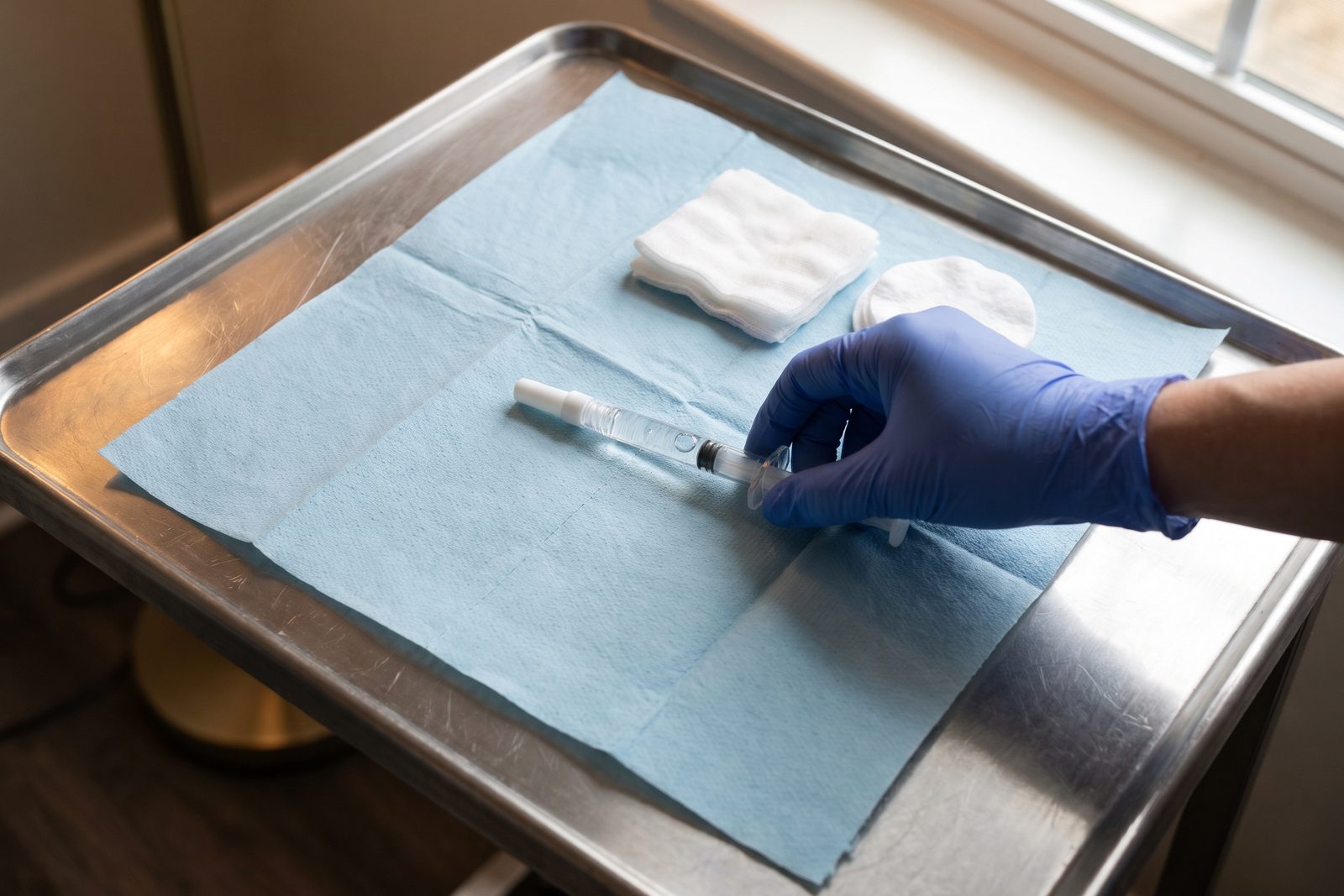
Filler can soften some acne scars, mainly wide, rolling scars that flatten when the skin is stretched, but for most fillers the lift is temporary. According to the American Academy of Dermatology (AAD), most fillers last 3 months to 2 years. Bellafill holds the FDA approval specific to acne scars, and most plans pair filler with other treatments.
Can filler fix acne scars?
Filler can soften some acne scars, but it rarely fixes them on its own. According to the AAD, filler adds volume to depressed scars and can help the body make collagen, yet most fillers give temporary results of 3 months to 2 years and need touch-ups. Filler does most for wide, soft-edged scars and is less predictable for narrow, deep ones.
A dermal filler is an injectable implant placed under the skin to create a smoother or fuller look, and the FDA regulates fillers as medical devices. In an acne scar, filler lifts the floor of the dent closer to the surrounding skin. That is why the shape of the scar decides so much: filler can raise a broad, shallow hollow, but it cannot do much for a narrow track that runs deep.
A 2026 systematic review of 24 studies in Clinical, Cosmetic and Investigational Dermatology found that every filler type studied improved atrophic (sunken) acne scars, with effects lasting from 3 to 6 months to more than 24 months depending on the product. Many of those studies are small.
Which acne scars does filler help, and which does it not?
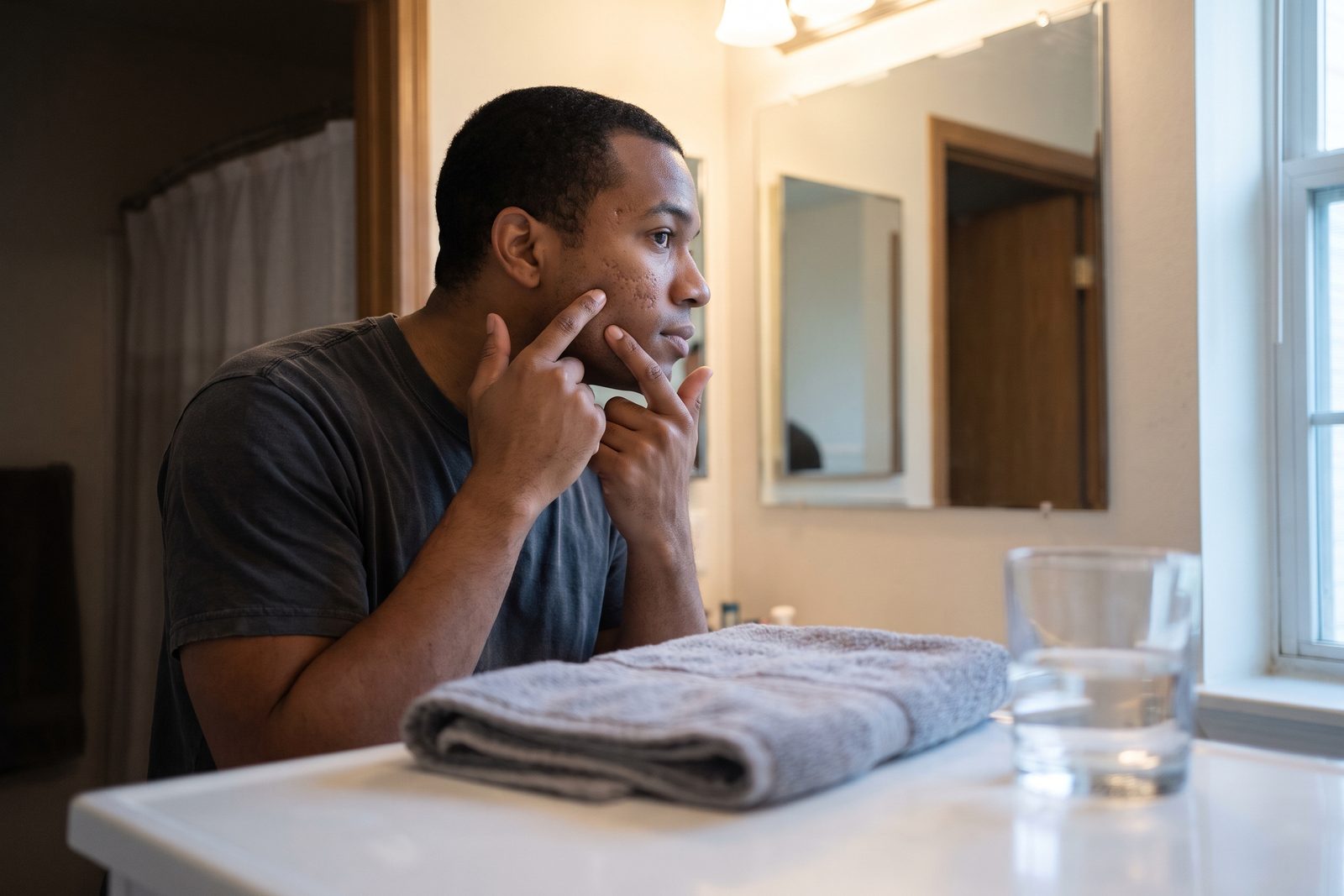
Filler helps rolling acne scars most consistently, and results in boxcar and ice pick scars are less predictable. The AAD describes rolling scars as wide and shallow, boxcar scars as round or oval depressions, and ice pick scars, the most common type, as small but deep. In the FDA trial behind Bellafill's 2014 acne scar approval, only soft-edged rolling scars that could be stretched out were treated.
Distensible is the word to know: a distensible scar is one that softens or flattens when the skin around it is gently stretched. Bellafill's label says its safety and effectiveness for non-distensible scars have not been established, and its use for ice pick scars has not been studied. Subcision, covered below, is designed for scars held down by fibrous strands. For a rough home check, stretch the skin beside a scar between two fingers in good light and see whether the dent fades.
Studies by scar type mostly agree. The 2026 review describes a 2023 needle-free hyaluronic acid trial in which rolling scars improved more than boxcar and ice pick scars, and a small 2006 calcium hydroxylapatite study with the same pattern, while some studies combining filler with other treatments reported gains in ice pick scars.
| Scar type | What it looks like (AAD) | Does filler help? | What usually does more |
|---|---|---|---|
| Rolling | Wide and shallow; many together look wavy | Often, if soft-edged and it stretches out; the scar type in the FDA trial | Filler paired with subcision or microneedling |
| Boxcar | Round or oval dent, wider than ice pick | Sometimes, mainly shallow ones; excluded from the FDA trial | Microneedling or peels over several months |
| Ice pick | Small opening that goes deep; the most common type | Less predictable; mixed results, mostly in combination studies; not studied for Bellafill | Scar surgery that removes the scar, sometimes followed by another procedure (AAD) |
| Raised | Firm, raised scar from too much collagen | No; these scars need less tissue, not more | Injections of a corticosteroid or other medicine (AAD) |
How long does filler last in acne scars?
Filler in acne scars is temporary for most products. According to the AAD, most fillers give results lasting 3 months to 2 years, most require a series of treatments, and touch-ups keep results going, even with a non-absorbable filler as skin ages. The 2026 review found calcium hydroxylapatite and a few other fillers lasted at least 6 months in scars.
Hyaluronic acid (HA) is a sugar molecule found naturally in skin, and many fillers are made from it. In a 2022 split-face trial of 15 people, an HA filler improved rolling scars more than saline 90 days after the last treatment, though saline also helped a little, and 13 of 14 people preferred the filler side; the 2026 review cites a 2024 follow-up in which the improvement held at 2 years. The FDA notes that fillers not made of materials such as HA, and non-absorbable fillers in particular, may be difficult or impossible to remove.
Plan the calendar around how long filler lasts in scars. A filler-only approach means repeat visits for as long as you want the lift, each with the usual filler risks, which is one reason filler tends to be one part of an acne scar plan rather than all of it.
A consultation is the place to ask. Dr. Payman sees patients in Buckhead and Cumming.
What is the FDA-approved filler for acne scars?
Bellafill is the filler with a specific FDA approval for acne scars. According to the FDA, it was approved in December 2014 for moderate to severe, atrophic, distensible facial acne scars on the cheek in people over 21. It is made of non-absorbable polymethylmethacrylate (PMMA) microspheres in a bovine collagen gel with lidocaine, and because of the collagen, a skin test is required first.
In the FDA trial, 147 people with rolling cheek scars received Bellafill or saline. At 6 months, 64% of the Bellafill group met the success goal, at least a 2-point improvement on a 4-point scale in half or more of their treated scars, against 33% with saline. The trial included 67 people with Fitzpatrick skin types IV to VI, and success in types V and VI was 79.2%.
Other filler types have scar evidence too, much of it from small studies: the 2026 review found that every filler type it covered improved atrophic scars, and in the 2022 split-face trial an HA filler improved rolling scars more than saline. Bellafill is not among the fillers Derm Clinic MD offers; the dermal fillers page lists the HA filler families the office uses.
Why do most acne scar plans pair filler with other treatments?
Most acne scar plans pair filler with other treatments because each one addresses a different part of the scar. According to the AAD, a clinician may first lift sunken scars with acne scar surgery and then inject filler for volume, and the FDA has authorized microneedling devices to improve the look of facial acne scars in adults 22 and older.
Subcision is a procedure in which a needle or blunt cannula is moved back and forth under a scar to cut the fibrous strands holding it down. A 2023 review of 16 clinical studies in the Journal of Cosmetic Dermatology found it effective for atrophic acne scars and noted that combining it with a filler, such as hyaluronic acid gel or a platelet gel made from your own blood, can improve results and help keep scars from sinking back.
Derm Clinic MD's acne scar plans usually combine microneedling, peels or laser resurfacing over several months. It offers SkinPen microneedling, which can be booked online, and chemical peels. Whether filler belongs in your plan is a question to raise at the consultation. Our guides to microneedling versus a chemical peel and the microneedling results timeline go deeper.
What are the risks of filler for acne scars?
Filler for acne scars carries the same risks as filler elsewhere in the face. According to the FDA, bruising, redness, swelling, pain, tenderness, itching and rash are common, nodules and infection are less common, and the most concerning risk is unintended injection into a blood vessel, which can cause tissue death, vision problems including blindness, or stroke.
The FDA adds that most side effects, such as swelling and bruising, occur shortly after injection and many resolve in a few days to weeks, but in some cases, side effects can appear weeks, months or years after injection. In the 2026 review, common side effects in scar studies were short-lived redness, swelling and bruising, with nodules and darkening less frequent.
If you are weighing filler, our dermal fillers overview covers the filler families Derm Clinic MD offers. Ask which product would be used, whether it could be removed if needed, and what the plan is if a blood vessel problem occurs; the FDA tells providers to have one ready.
Can acne scars be removed completely?
Acne scars can usually be improved, not erased. The AAD says some treatments make scars look less noticeable while others smooth wavy texture, and even in the FDA Bellafill trial, success meant at least a 2-point improvement on a 4-point scale in half the treated scars, not scar-free skin.
The AAD suggests deciding before a consultation how you want to look, what you can spend, how much downtime you can take and how much time you can give to treatment, and it notes that medical insurance does not pay for acne scar treatment. These questions turn that into a plan you can compare.
- Which of my scars are rolling, boxcar or ice pick, and which treatment fits each?
- Would filler lift any of them, which product would you use, and how long would it last?
- What else is in the plan, in what order, and over how many months?
- What recovery should I plan for, and what does the whole plan cost?
- What happens if a side effect appears or I do not like how it looks?
What happens at an acne scar visit at Derm Clinic MD?
An acne scar visit at Derm Clinic MD starts with an in-person consultation with Dr. Arshia Payman, the physician who owns this physician-led med spa, at the Buckhead (Atlanta) or Cumming office. She asks what bothers you before any treatment is named, reviews your history and past treatments, and explains what each option can and cannot do. You do not have to be treated that day.
If you're coming in about acne scars for the first time, first Dr. Payman wants to understand exactly which scars bother you and what you want instead, so point to the ones you notice in overhead light. If you have had filler in your scars before, bring the product name and date, and bring a list of every acne treatment you have used.
- Consult first: Dr. Payman asks what bothers you and what you want instead, before any treatment is named, so the plan aims at the scars you notice most rather than a generic package.
- Breakouts first: Derm Clinic MD treats scars, not active acne, so ongoing breakouts go to a physician who treats acne first, because stopping breakouts prevents new scars, the AAD explains. If you still break out, expect that step to come first.
- Your history: she reviews your health history, medications, supplements and past treatments, including product, date and how long it lasted. List acne medicines from the past two years, since the AAD says some scar treatments cause side effects during or soon after certain acne medicines.
- Filler from elsewhere: if you have had filler before, she asks what was used, where and when, and discusses dissolving some or all of it, so that a new plan does not build on product you cannot see. Share whatever records you have.
- Photos for your chart: photos are usually taken for your chart, so progress can be judged in the same angle and light months later, since scar treatment shows gradually and is easy to misjudge in a mirror.
- The options, honestly: you hear what each option can and cannot do for your scars, with risks, recovery and cost. A peel's type, strength and number of visits are set at the consultation. If you came asking about filler, ask which scars it could lift and for how long.
- Your decision: you sign consent only if you go ahead, and the office confirms your cost first, so you decide with the full picture. SkinPen microneedling can be booked online; for filler, the first visit is a consultation. You leave with written aftercare, the office is a phone call away, and when you are ready, you can book a consultation (opens in a new tab) at either office.
Questions people ask
Does Botox help acne scars?
Not on its own, based on current evidence. A 2026 critical review in Clinical, Cosmetic and Investigational Dermatology rated the evidence for botulinum toxin in atrophic acne scars as low to moderate, mostly from combination studies, and concluded it is weak. For sunken scars, the scar-type table above shows what usually does more for each type.
Can I get filler for acne scars if I still break out?
It is usually better to wait. The AAD says treating acne first reduces inflammation and prevents new scars, and that scar treatment typically begins once acne is under control. Derm Clinic MD offers cosmetic care only, so active acne is treated first by a physician who manages acne, and scar planning follows once breakouts have settled.
What works for ice pick scars if filler does not?
Ice pick scars are narrow and deep, and filler results in them are mixed. The AAD describes acne scar surgery that removes a scar and closes the area with stitches or a skin graft, usually under local anesthesia, sometimes followed by another procedure. Bellafill's label notes that its use for ice pick scars has not been studied.
Does filler for acne scars work in darker skin?
The FDA trial data are encouraging. The Bellafill trial included 67 people with Fitzpatrick skin types IV to VI, and in types V and VI, 79.2% met the success goal against 33.3% with saline. Treatment-related adverse events were similar across skin types: 8.0% in types V and VI and 8.3% in types I to IV. The 2026 review lists darkening as an infrequent side effect.
How soon will I see a difference after filler in acne scars?
Usually right away, once swelling settles. The 2026 review describes fillers as giving immediate volume correction in scars. The FDA says most side effects, such as swelling and bruising, occur shortly after injection and many resolve in a few days to weeks. The AAD notes most fillers need a series of treatments.
Does insurance cover filler for acne scars?
No, in most cases. The AAD says medical insurance does not pay for acne scar treatment, and it suggests deciding what you can spend before your consultation. At Derm Clinic MD, you hear the cost of each option at the consultation, and the office confirms your cost before any treatment.
Sources
- Acne scars: Consultation and treatment. American Academy of Dermatology, last updated 2023. https://www.aad.org/public/diseases/acne/derm-treat/scars/treatment
- Acne scars: Signs and symptoms. American Academy of Dermatology, last updated 2023. https://www.aad.org/public/diseases/acne/derm-treat/scars/symptoms
- Dermal Fillers (Soft Tissue Fillers). U.S. Food and Drug Administration, content current as of 2023. https://www.fda.gov/medical-devices/aesthetic-cosmetic-devices/dermal-fillers-soft-tissue-fillers
- Summary of Safety and Effectiveness Data: Bellafill, PMA P020012/S009. U.S. Food and Drug Administration, 2014. https://www.accessdata.fda.gov/cdrh_docs/pdf2/P020012S009b.pdf
- Bellafill Instructions for Use, PMA P020012/S009 labeling. U.S. Food and Drug Administration, 2014. https://www.accessdata.fda.gov/cdrh_docs/pdf2/P020012S009c.pdf
- Microneedling Devices. U.S. Food and Drug Administration. https://www.fda.gov/medical-devices/aesthetic-cosmetic-devices/microneedling-devices
- Injectable Fillers for Atrophic Acne Scars: A Systematic Review of Mechanisms, Evidence, and Clinical Algorithms (Tao A, et al.). Clinical, Cosmetic and Investigational Dermatology, 2026. https://pmc.ncbi.nlm.nih.gov/articles/PMC13070406/
- A split-face, blind, randomized placebo-controlled clinical trial investigating the efficacy and safety of hyaluronic acid filler for the correction of atrophic facial scars (Siperstein R, et al.). Journal of Cosmetic Dermatology, 2022. https://pubmed.ncbi.nlm.nih.gov/35689521/
- Subcision in acne scarring: A review of clinical trials (Ahramiyanpour N, et al.). Journal of Cosmetic Dermatology, 2023. https://pubmed.ncbi.nlm.nih.gov/36315903/
- Exploring the Therapeutic Potential of Botulinum Toxin in Treating Post-Acne Sequelae: A Critical Review (Liao X, et al.). Clinical, Cosmetic and Investigational Dermatology, 2026. https://pubmed.ncbi.nlm.nih.gov/42639015/
This article is general education and is not medical advice. It does not replace an in-person consultation. Whether a treatment suits you, and what result is realistic, depends on your health history and an examination.
Derm Clinic MD · Last updated November 2026.