

Melasma is usually managed, not erased. According to the American Academy of Dermatology (AAD), treatment often combines daily sun protection, including a tinted sunscreen with iron oxide, with a prescription cream such as hydroquinone, and sometimes a peel or microneedling. Results usually take 3 to 12 months, and patches often return with sun, heat, hormones or stopping treatment.
What is melasma, and how is it different from other dark spots?
Melasma is a chronic skin condition that causes blotchy brown patches, usually on both sides of the face. According to the AAD, it appears most often on the cheeks, forehead, nose, chin and above the upper lip, can look bluish-gray in darker skin, and is much more common in women than in men and in medium or dark skin tones than in light ones.
Hyperpigmentation is the umbrella term for any patch of skin darker than your usual tone, and melasma is one type. Others include sun spots, freckles and the marks left after a pimple heals. Each responds to different care, and a treatment that fades one can darken another. The AAD notes that melasma is not painful or itchy, though studies show it can lower self-esteem.
Risk runs in families. The AAD says risk is higher for women between 20 and 40, for medium or dark skin tones and for people with a blood relative who has melasma; in one study of 324 people with melasma, 48% reported such a relative. Men get it too, in the same places on the face.
What causes melasma, and why does it keep coming back?
Melasma happens when the cells that give skin its color become overactive. The AAD lists sunlight, pregnancy, birth control pills, some other medications, tanning beds, thyroid disease and possibly stress as triggers, and a 2024 review in the American Journal of Clinical Dermatology adds heat exposure and calls melasma hard to treat, with a high risk of recurrence.
Recurrence has a plain explanation: treatment lowers the pigment you can see, but the tendency stays. The 2024 review describes a 2010 study of 60 people in which 51.7% had used triple-combination cream for more than three months in a year, most often because melasma came back whenever they stopped, and a 2016 study in which melasma returned in 58.8% of 34 people a year after one type of laser. The AAD adds that sunlight makes skin produce more pigment, darkening old patches and causing new ones.
Visible light is the part of sunlight you can see, roughly 400 to 700 nanometers. The AAD says it has been shown to worsen melasma, especially in darker skin. A 2021 review in the Journal of the American Academy of Dermatology explains that broad-spectrum sunscreens do not adequately protect against it; to block visible light a sunscreen must be visible on the skin, which is what the iron oxides in tinted formulas do.
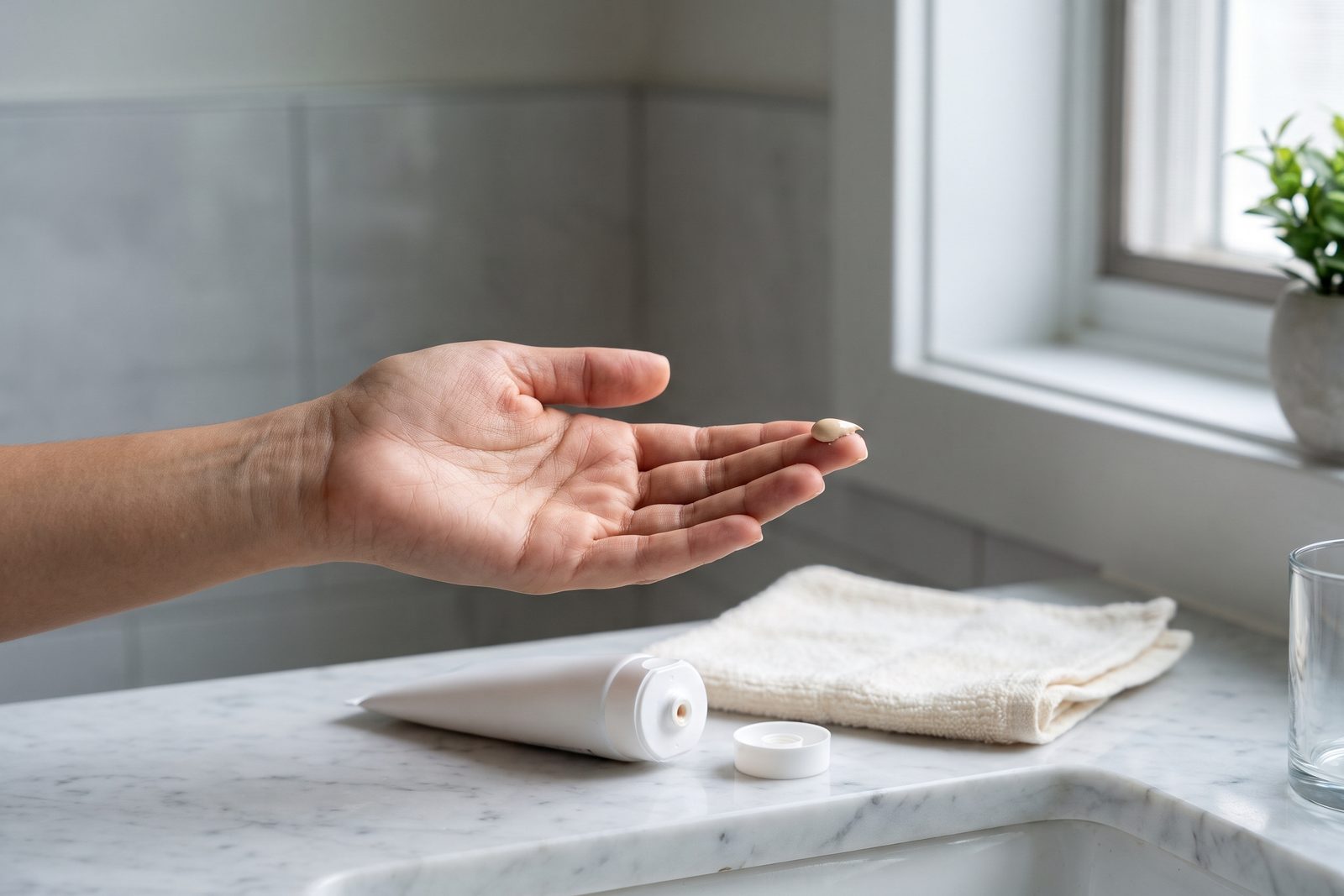
What works for melasma?
The evidence for melasma favors sun protection plus prescription creams. A 2020 evidence-based review of 113 studies with 6,897 participants, in the American Journal of Clinical Dermatology, found hydroquinone alone and triple-combination cream (hydroquinone, tretinoin and a corticosteroid) the most effective and well-studied options, while peels, lasers and light treatments were equal or inferior to creams and carried more side effects.
Hydroquinone now needs a prescription in the U.S. The FDA says that since the CARES Act took effect on September 23, 2020, over-the-counter skin lighteners containing hydroquinone cannot be legally sold without an approved application, and it warns of side effects from them, including ochronosis, a skin discoloration that may not go away. Tri-Luma, a prescription triple-combination cream, is the only FDA-approved drug containing hydroquinone, approved for short-term treatment of moderate to severe facial melasma.
The AAD lists azelaic acid, kojic acid and vitamin C as gentler choices, and tranexamic acid, as a cream or a pill, for melasma that is very hard to treat. The prescribing label for tranexamic acid tablets lists a history of blood clots and combined hormonal birth control as contraindications, so mention either one at your consultation. Which fits you is a prescribing decision. Derm Clinic MD offers medical-grade skincare, and a prescription product, if it fits, is prescribed after the consultation.
A consultation is the place to ask. Dr. Payman sees patients in Buckhead and Cumming.
Is a chemical peel or laser better for melasma?
For most people with melasma, a chemical peel is the gentler procedure to add, and laser is a later option. A 2024 systematic review in Dermatologic Surgery of 24 studies with 1,075 people concluded that chemical peels work for melasma, with glycolic acid peels rated highest, while the 2024 review in the American Journal of Clinical Dermatology says lasers are not a first-line melasma treatment.
A chemical peel removes pigment by exfoliation, and the 2024 clinical review notes that deeper peels bring more severe side effects, so superficial peels are used for sensitive skin, and preparing the skin in the weeks beforehand can lower the risk of dark marks. At Derm Clinic MD, the type, strength and number of chemical peel visits are set at your consultation.
Lasers carry a specific risk with melasma. The 2024 clinical review reserves them for people who have not improved with medical treatment, given the cost and high recurrence once treatment stops, and says intense pulsed light (IPL) risks relapse, dark marks and worsening. Derm Clinic MD offers CO2 laser resurfacing and a microlaser peel and does not offer IPL. Laser starts with a consultation, where you hear what each option can and cannot do, and the office's instructions ask for no sun or UV lamps for 6 weeks before.
Can microneedling help melasma?
Microneedling can help melasma as an add-on to creams, not as a treatment on its own. A 2022 meta-analysis in the Journal of the American Academy of Dermatology pooled 12 studies with 459 people and found that adding microneedling to topical treatment gave extra improvement, moderate at 8 weeks and large at 12 to 16 weeks, with no serious side effects reported.
Microneedling is a procedure that makes microscopic tears in the skin with fine needles, and the AAD says that as the skin heals it tends to have a more even tone. The topical treatments paired with it in those trials varied, including tranexamic acid, vitamin C and hydroquinone-based products, so the meta-analysis could not say which pairing does most.
Derm Clinic MD offers SkinPen microneedling, and it can be booked online. If melasma is your reason, say so, because the add-on only makes sense alongside the creams and sun protection. Our guide to microneedling versus a chemical peel compares the two for tone and texture.
What is the difference between melasma and sun spots?
Melasma and sun spots differ in shape, pattern and cause. According to the AAD, melasma forms blotchy patches, usually on both sides of the face, while the Cleveland Clinic describes sun spots as flat, round or oval spots from freckle size to about half an inch across, most common in adults over 50 and caused by ultraviolet light on exposed skin.
The difference between melasma and sun spots changes the plan. Sun spots are discrete marks of past sun damage, while melasma is diffuse and sensitive to hormones, heat and light, so the irritation of some procedures can darken it. A light treatment that clears a sun spot can flare melasma, which is why the 2024 clinical review lists IPL as a risk. Many people have both, so sort the marks before treating anything. Our guide to sun spots on the face covers that side.
What does a year-round melasma plan look like?
A year-round melasma plan has three phases: protect every day, treat to fade, and maintain to keep patches from returning. According to the AAD, results usually take 3 to 12 months, and longer if you have had melasma for a long time, so a realistic plan is measured in seasons rather than weeks.
The maintain phase is where many melasma plans slip. In a 2015 randomized trial of 40 people described in the 2024 clinical review, melasma scores rose by a median of 0.45 points over six months of spring and summer with a tinted sunscreen that blocks visible light, against 2.43 points with one that did not. A few things change the plan, and are worth raising at your consultation.
- Pregnancy or breastfeeding: the AAD says pregnancy-triggered melasma can fade after delivery, and the office's laser sheet lists pregnancy and breastfeeding as reasons not to have laser.
- A medicine trigger: the AAD lists birth control pills and sun-sensitizing medicines; ask the doctor who prescribed yours before changing anything.
- Darker skin: the AAD says visible light worsens melasma especially in darker skin tones, so a tinted sunscreen matters even more.
- Heat: the 2024 review lists heat exposure among melasma's associations, so hot kitchens, saunas and long outdoor workouts are worth mentioning.
| Phase | What it involves | What the evidence says | Timing in Georgia |
|---|---|---|---|
| Protect (daily, all year) | SPF 30 or higher with an iron oxide tint, a wide-brimmed hat, shade, no tanning beds | AAD: tanning beds can worsen melasma and stop treatment working | Reapply at least every two hours outdoors, per the AAD |
| Treat (first months) | A prescription cream if it fits, plus a peel or microneedling series | Results in 3 to 12 months (AAD); microneedling adds benefit by 12 to 16 weeks | Fall and winter starts mean less sun on treated skin |
| Maintain (ongoing) | Daily tinted sunscreen and any prescribed maintenance | Visible light protection kept melasma steadier through spring and summer | Tighten sun habits in early spring, before the first flare |
What happens at a melasma visit at Derm Clinic MD?
A melasma visit at Derm Clinic MD starts with an in-person consultation with Dr. Arshia Payman, the physician who owns this physician-led med spa, at the Buckhead (Atlanta) or Cumming office. She asks what bothers you before any treatment is named, reviews your history and explains what each option can and cannot do. You do not have to be treated that day.
If you're coming in about melasma for the first time, first Dr. Payman wants to understand exactly what bothers you and what you want instead, before any treatment is named. If you have already tried creams or peels elsewhere, bring the names and dates. If you would rather start with the least you can do, say so; sometimes the honest answer is less, or not yet.
- Consult first: Dr. Payman asks what bothers you and what you want instead, so that the plan aims at your goal, whether that is fading patches, avoiding summer flares or both. You describe the patches and when they look worst.
- Your history: she reviews your health history, medications, supplements and past treatments, including product, date and how long it lasted, because birth control pills, some medicines and past peels or lasers can change how melasma behaves. Bring a list.
- Is it melasma?: Derm Clinic MD provides cosmetic care only, so a spot that is raised, changing, bleeding or unlike the others goes to a physician who does skin checks first. That way nothing that needs a diagnosis gets faded instead. Point out any spot that has changed.
- Photos for your chart: photos are usually taken for your chart, so the same patches can be compared months later, since melasma changes slowly and memory is a poor judge. Mention which patches darken in summer so they are noted.
- The options, honestly: you hear what each option can and cannot do, plus the risks, recovery and cost. A prescription product, if it fits, is prescribed after the consultation, and a peel's type, strength and number of visits are set then, so you leave knowing the order of steps.
- Your decision: you sign consent only if you go ahead, and the office confirms your cost before any treatment, so you can start, wait out a sunny stretch or think it over without pressure.
- Aftercare: you leave with written aftercare, and the office is a phone call away, so a product that stings or a patch that darkens gets a quick answer. When you are ready, you can book a consultation (opens in a new tab) at either office.
Questions people ask
Can melasma go away for good?
Sometimes. The AAD says melasma triggered by pregnancy or a medication can fade after delivery or once the medication stops, but it can also last for years. Treatment fades patches, and relapse is common once it stops, so most people plan on long-term sun protection, which the AAD says helps prevent melasma from returning.
Is melasma dangerous?
No. The AAD says melasma cannot harm your body, and it does not itch or hurt. It also notes that melasma can look like another skin condition, sometimes needing a biopsy to tell apart, so a patch that is raised, changing or bleeding should be checked by a physician who does skin exams.
Can I treat melasma while pregnant or breastfeeding?
Sun protection is the main tool. The 2024 clinical review describes a 2007 study of 200 pregnant women who used SPF 50+ sunscreen: 2.7% developed melasma, against 53% in an earlier study by the same investigators, and 8 of 12 who already had melasma improved. Any cream is a decision for your prescriber, and the office's laser sheet lists pregnancy and breastfeeding as reasons not to have laser.
What is laser toning, and does it work for melasma?
Laser toning usually means repeated low-energy Q-switched Nd:YAG laser sessions. The 2024 clinical review says it works about as well as triple-combination cream, but relapse is high: 58.8% of 34 people relapsed within a year in a 2016 study, and every participant relapsed in a 2020 randomized trial. It can also cause white spots or rebound darkening. It is not among the lasers Derm Clinic MD lists.
Does insurance cover melasma treatment?
Usually not. The AAD says that because treating melasma is not considered medically necessary, most insurers will not cover the cost, and it suggests asking about cost before you start. At Derm Clinic MD, you hear the cost of each option at the consultation, and the office confirms your cost before any treatment.
Can I wear makeup over melasma while treatment works?
Yes. The AAD says covering melasma with makeup is reasonable while treatment works and recommends applying products in order: your melasma medication first, then sunscreen, then camouflage makeup. It also mentions makeup containing iron oxide, the pigment that lets tinted sunscreen block visible light, as part of plans that include tranexamic acid.
Sources
- Melasma: Diagnosis and treatment. American Academy of Dermatology, last updated 2022. https://www.aad.org/public/diseases/a-z/melasma-treatment
- Melasma: Causes. American Academy of Dermatology, last updated 2022. https://www.aad.org/public/diseases/a-z/melasma-causes
- Melasma: Signs and symptoms. American Academy of Dermatology, last updated 2022. https://www.aad.org/public/diseases/a-z/melasma-symptoms
- Melasma: Self-care. American Academy of Dermatology, last updated 2023. https://www.aad.org/public/diseases/a-z/melasma-self-care
- An Update on New and Existing Treatments for the Management of Melasma (Gan C, Rodrigues M). American Journal of Clinical Dermatology, 2024. https://pmc.ncbi.nlm.nih.gov/articles/PMC11358250/
- Melasma Treatment: An Evidence-Based Review (McKesey J, et al.). American Journal of Clinical Dermatology, 2020. https://pubmed.ncbi.nlm.nih.gov/31802394/
- Photoprotection beyond ultraviolet radiation: A review of tinted sunscreens (Lyons AB, et al.). Journal of the American Academy of Dermatology, 2021. https://pubmed.ncbi.nlm.nih.gov/32335182/
- Chemical Peels for Melasma: A Systematic Review (Sarkar R, Lakhani R). Dermatologic Surgery, 2024. https://pubmed.ncbi.nlm.nih.gov/38530985/
- Microneedling as an adjuvant to topical therapies for melasma: A systematic review and meta-analysis (Bailey AJM, et al.). Journal of the American Academy of Dermatology, 2022. https://pubmed.ncbi.nlm.nih.gov/33857549/
- Tranexamic acid tablets: prescribing information (indications, contraindications). U.S. National Library of Medicine, DailyMed (FDA label), revised 7/2024. https://dailymed.nlm.nih.gov/dailymed/drugInfo.cfm?setid=031bf7c2-3b07-469d-bc5a-31fc6238e25f
- FDA works to protect consumers from potentially harmful OTC skin lightening products. U.S. Food and Drug Administration, 2022 (content current as of May 2026). https://www.fda.gov/drugs/drug-safety-communications/fda-works-protect-consumers-potentially-harmful-otc-skin-lightening-products
- Liver Spots. Cleveland Clinic, last updated 2021. https://my.clevelandclinic.org/health/diseases/21723-liver-spots
This article is general education and is not medical advice. It does not replace an in-person consultation. Whether a treatment suits you, and what result is realistic, depends on your health history and an examination.
Derm Clinic MD · Last updated November 2026.